
Skip to main content Skip to search

Archives for July 2026

What Your Bank Statement Says About Your Company’s Future

Bank statements furnish immediate perceptions into a company’s fiscal condition, operational effectiveness, and overall stability. In contrast to conventional financial reports, which offer retrospective summaries, bank records meticulously document the actual movement of capital as it transpires. Vigilant examination of these transactions enables enterprises to leverage favorable developments and proactively identify potential hazards. Ultimately, sustained equilibrium in account balances is indicative of judicious managerial oversight, whereas erratic cash flow patterns suggest underlying operational deficiencies requiring immediate remediation.

Why Your Bank Statement Matters

Cash is a business’s lifeblood, meaning even profitable companies can fail without enough liquidity to cover daily expenses. Bank statements solve this by offering a transparent view of cash movement, serving as a primary tool for tracking financial health.Regular analysis helps businesses optimize budgets, evaluate customer and supplier payment habits, spot anomalies, and make data driven choices. Furthermore, these records allow lenders and investors to verify financial stability when vetting funding requests. 

What Your Bank Statement Reveals

Bank Statement IndicatorWhat  It IndicatesBusiness  Impact
Consistent cash deposits.Stable sales and timely customer payments.Demonstrates healthy business operations.
Increasing bank balance.Positive cash flow and strong liquidity.Supports future growth and investment.
Declining bank balance.Cash reserves are reducing.May create liquidity challenges.
Regular supplier payments.Good financial discipline.Strengthens supplier relationships.
Delayed customer receipts.Customers are taking longer to pay.Increases pressure on working capital.
Large unexpected withdrawals.High expenses or unusual transactions.Requires immediate review.
Frequent bank chargesInefficient cash management.Reduces overall profitability.
Loan repayments.Existing debt obligations.Helps assess debt servicing capacity.
Seasonal cash movements.Business is influenced by seasonal demand.Assists in planning inventory and cash requirements.
Growing monthly deposits.Expanding business activity.Indicates increasing revenue potential. 

Identifying Financial Risks Before They Escalate

A bank statement can serve as an early warning system for potential financial challenges. Patterns such as declining account balances, delayed customer payments, increasing bank charges, or unusually high withdrawals may indicate underlying issues that require attention. By reviewing these trends on a regular basis, businesses can detect risks before they develop into significant financial problems. Early identification allows management to improve cash flow, strengthen internal controls, reduce unnecessary expenses, and make proactive decisions that protect the company’s long term financial health.

Warning Signs That Require Attention

Certain bank statement patterns reveal hidden financial risks. 

  • Shrinking Balances: Expenses are outstripping income.
  • Lagging Collections: Late customer payments starve operations.
  • Frequent Overdrafts: Poor cash planning or debt reliance.
  • Mystery Withdrawals: Potential fraud, errors, or double payments.
  • Spiking Bank Fees: Inefficient practices or failed transactions. 

Spotting these indicators early allows businesses to protect profitability and survival.

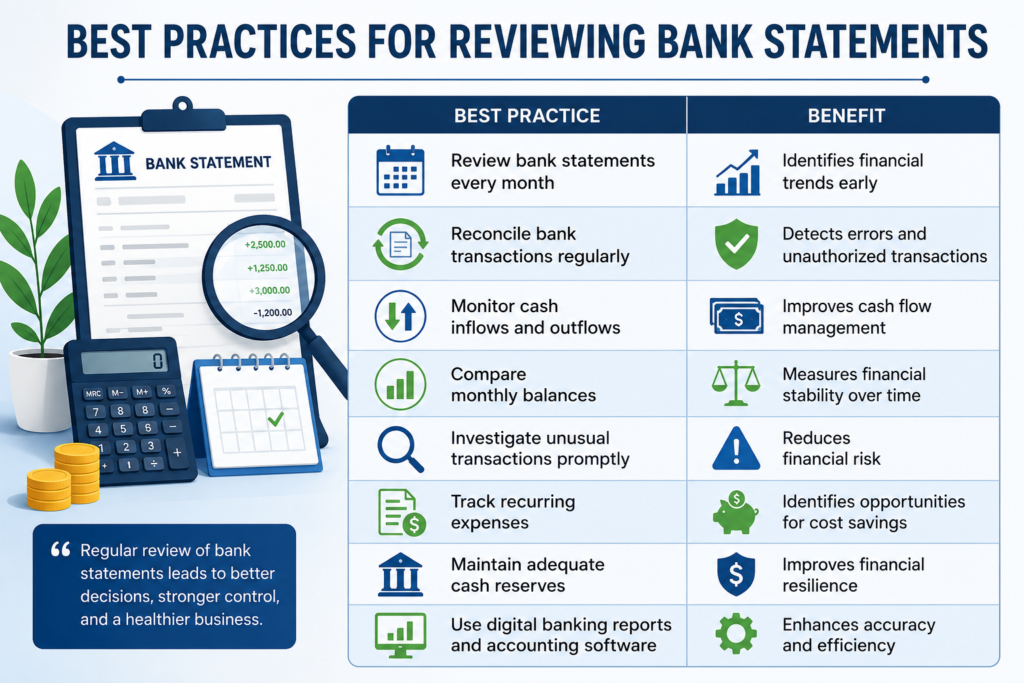
Best Practices for Reviewing Bank Statements:
How Regular Statement Reviews Support Business Growth

Regularly reviewing your bank statement helps businesses make informed financial decisions and stay prepared for future challenges. It provides a clear understanding of cash flow patterns, spending habits, and payment trends, allowing management to identify opportunities for improvement and address potential issues early. Consistent monitoring also supports better budgeting, strengthens financial discipline, and ensures the business has sufficient liquidity to support daily operations and long term growth.

The Importance of Maintaining Healthy Cash Flow

Healthy cash flow acts as the primary foundation for business stability and long-term success. While generating profit matters, a company cannot survive without sufficient liquidity to cover daily obligations. Regular bank statement analysis delivers a real-time tracking mechanism, helping management verify that immediate cash can cover payroll, rent, utilities, vendor bills, and debt obligations. 

Operational and Strategic Benefits

  • Early Problem Detection: Statement reviews quickly flag delayed customer receivables or ballooning operational costs. 
  • Proactive Interventions: Spotting liquidity trends allows businesses to adjust vendor payment timelines, control expenses, or accelerate collection efforts. 
  • Financing Growth: Maintaining strong cash reserves allows companies to fund expansions, purchase assets, or absorb unexpected costs without costly debt financing.

Conclusion

Financial statements serve as vital strategic instruments rather than mere administrative documentation. They provide insights into a company’s proficiency in cash management, cost containment, revenue generation, and strategic expansion planning. Periodic examination facilitates the mitigation of risks, enhancement of operational efficacy, and the adoption of forward thinking decision making processes. In essence, continuous oversight identifies emerging prospects and potential impediments at an early stage, thereby fostering a more robust enterprise.
Read more

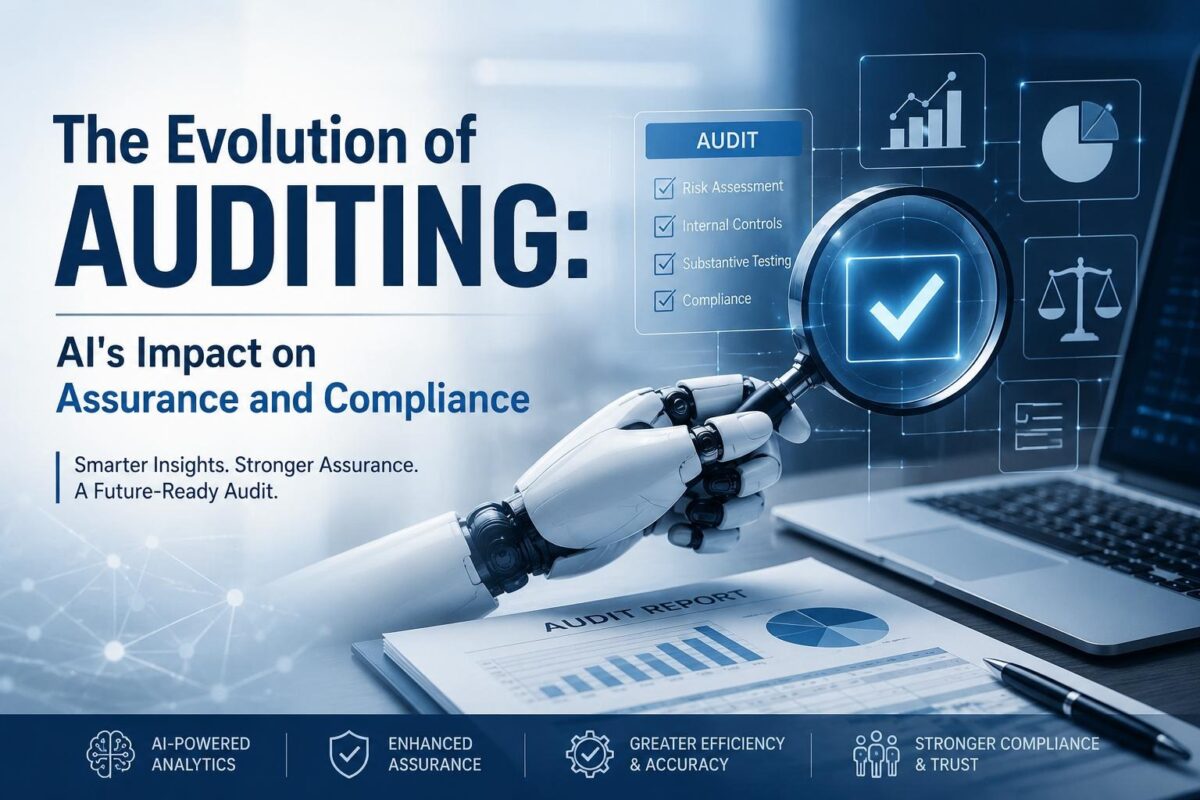
The Evolution of Auditing: AI’s Impact on Assurance and Compliance

Artificial Intelligence is transforming traditional auditing methods, which previously relied on manual sampling and document reviews. AI enables faster analysis of massive datasets, improves anomaly detection, and enhances assurance quality. By automating repetitive tasks, AI does not replace auditors but instead empowers them to focus on risk evaluation, strategic insights, and complex judgments. 

Why AI Is Changing the Audit Landscape

The shift toward AI in auditing is fueled by several key demands:

  • Exploding data volumes: Managing massive quantities of financial transactions.
  • Stricter oversight: Meeting expanding regulatory and compliance rules.
  • Instant analytics: Accessing real-time financial insights.
  • Securing assets: Heightening focus on active fraud prevention.
  • Saving resources: Maximizing operational efficiency and cutting costs.
  • Modernized environments: Adapting to digital transformation across finance. 

Modern organizations reject purely historical audits. They now demand accelerated reporting, proactive risk detection, and continuous monitoring all year round. 

Traditional Auditing vs AI-Powered Auditing

AreaTraditional  AuditingAI-Powered  Auditing
Data ReviewSample-based testingAnalysis of entire datasets
Processing SpeedManual and time-consumingAutomated and significantly faster
Error DetectionDepends on samplingDetects hidden anomalies across all transactions
Fraud DetectionPeriodic reviewContinuous monitoring and pattern recognition
Risk AssessmentHistorical analysisPredictive and data-driven insights
Compliance MonitoringManual verificationAutomated compliance checks
DocumentationPaper or spreadsheet-basedDigital documentation with audit trails
ReportingPeriodicNear real-time dashboards and reports 

How AI Is Transforming Audit Processes

1. Intelligent Data Analysis

Artificial Intelligence processes millions of accounting entries in minutes. It highlights hidden, unusual transactions by categorizing threats into clear operational risk areas: 

Invoice & Vendor Risks

  • Duplicate invoices: Copycat billing errors or split-payment fraud schemes.
  • Unusual vendor payments: Out-of-pattern disbursements or unverified supplier changes. 

Bookkeeping & Journal Risks

  • Unusual journal entries: Manual adjustments posted to incorrect or rare cost centers.
  • Round dollar transactions: Large, exact-figure entries (e.g., ₹5,00,000) that lack organic asset or tax calculations. 

Timeline Risks

  • Off-hour transactions: Financial actions logged late at night or outside standard local business hours.

2. Continuous Auditing

Instead of reviewing financial records once or twice a year, AI enables continuous monitoring of transactions throughout the year.

Benefits include:

  • Earlier detection of issues
  • Faster corrective actions
  • Reduced audit surprises
  • Improved governance

3. Enhanced Fraud Detection

Machine learning algorithms recognize behavioral patterns and identify transactions that deviate from normal business activity.

AI can identify:

  • Duplicate payments
  • Ghost vendors
  • Suspicious employee reimbursements
  • Unauthorized access to financial systems
  • Unusual purchasing behavior

4. Automated Document Review

Modern AI tools can automatically review:

  • Invoices
  • Purchase orders
  • Contracts
  • Bank statements
  • Tax documents
  • Vendor agreements

This significantly reduces manual verification time while improving consistency.

Benefits of AI in Auditing

Artificial Intelligence (AI) fundamentally transforms the auditing profession by shifting it from reactive, sample based checking to proactive, full-population analysis. This technology acts as a powerful complement to human oversight, allowing auditors to dedicate more time to complex problem-solving and critical risk interpretation. 

100% Data Coverage vs. Sampling

  • Comprehensive Testing: Traditional audits rely heavily on statistical sampling, which can miss low-frequency anomalies. AI tools can process 100% of journal entries, bank statements, and transactions seamlessly. 
  • Hidden Pattern Visibility: Testing the complete dataset allows machine learning algorithms to uncover isolated or complex discrepancies that would otherwise go unnoticed. 

Proactive Fraud Detection and Continuous Monitoring

  • Real-Time Guardrails: Instead of waiting for annual or periodic reviews, AI enables real-time auditing and continuous compliance tracking. 
  • Instant Risk Flags: Systems automatically compare historical trends with current transaction logs to instantly catch duplicated expenses, unauthorized transactions, or weird accounting changes. 

Automation of Repetitive Operations

  • Seamless Reconciliation: Intelligent automation matching platforms like DataSnipper automate vendor ledger reconciliations, invoice verification, and data extraction from multi-page PDFs into uniform workpapers.
  • Minimized Error Risk: Shifting repetitive tasks—such as rule-based data entries—to AI reduces the natural human error caused by tedious, manual fatigue. 

Advanced Unstructured Document Parsing

  • Rapid Contract Reviews: Natural Language Processing  tools instantly extract highly nuanced information from large compliance papers, lease agreements, and corporate policies.
  • Cross Document Verification: AI can quickly scan legal contracts to flag non-compliance or trace discrepancy linkages back to original documentation. 

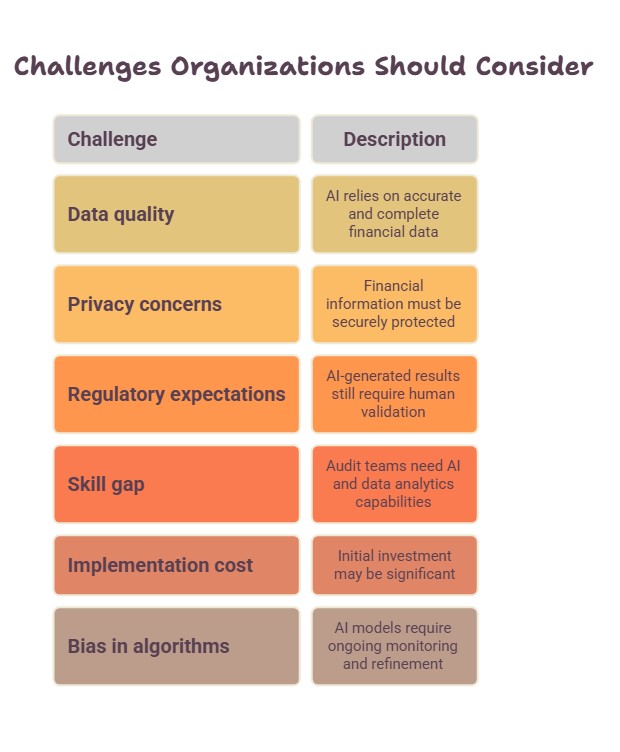
Challenges Organizations should consider

AI Will Not Replace Professional Judgment

AI will not replace human auditors because it cannot replicate professional skepticism, ethical judgment, or business context. While AI excels at data processing, human expertise remains irreplaceable for complex valuations, internal control assessments, and stakeholder communication. The future of the profession relies on close collaboration between advanced technology and human oversight. 

Now that we have covered the entire article, I can help you compile everything into a final product. I can:

  • Merge all summaries into a cohesive executive report.
  • Transform these points into a slide deck script for a presentation.
  • Create a comprehensive study guide with key definitions. 

Preparing for the Future of Auditing

Organizations must take specific steps to successfully deploy AI-enabled auditing. These steps focus on data readiness, workforce training, and governance:

Data & Infrastructure Readiness

  • High-quality financial data management: Centralise and clean data to provide reliable inputs for AI systems.
  • Secure digital document management: Protect confidential financial records with encrypted, accessible storage. 

Process & Technology Integration

  • Continuous monitoring systems: Move from periodic checks to real-time, automated transaction scanning.
  • Regular AI model reviews: Audit algorithms frequently to verify accuracy, eliminate drift, and ensure fairness. 

People, Governance & Oversight

  • Targeted workforce training: Upskill audit teams in data analytics and tool management.
  • Strong internal governance controls: Establish clear boundaries for how automated insights affect financial decisions.

Key Takeaways

  • AI is transforming auditing by automating repetitive tasks and enabling analysis of entire datasets.
  • Continuous auditing allows organizations to identify risks and anomalies throughout the year rather than only during periodic reviews.
  • Human expertise remains indispensable for professional judgment, ethical decision making, and interpreting complex business scenarios.

Conclusion

Artificial Intelligence represents a critical evolution in the auditing profession by significantly improving operational efficiency, expanding data capabilities, and enabling continuous compliance and assurance. Instead of eliminating human jobs, AI functions as an intelligent tool designed to empower auditors. The ultimate success of the industry relies on a balanced ecosystem that pairs automated technological accuracy with indispensable human governance and professional expertise. 

Read more

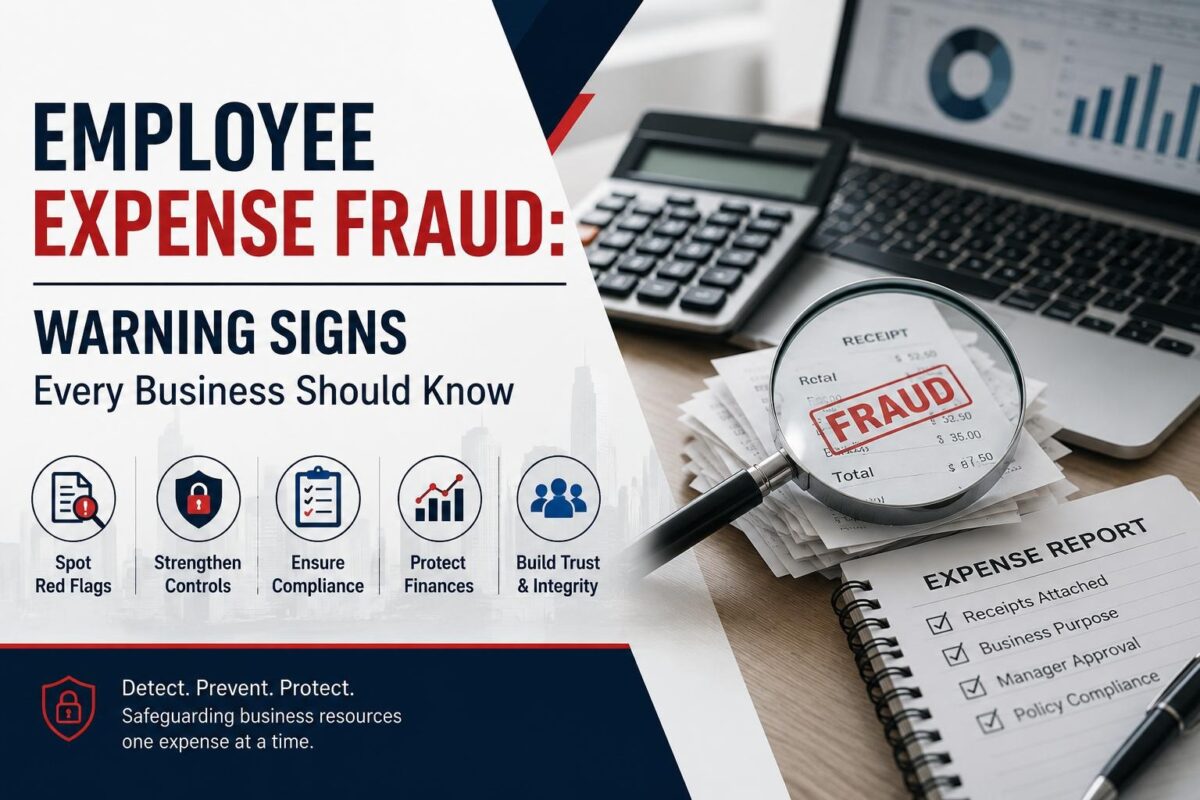
Employee Expense Fraud: Warning Signs Every Business Should Know

Employee expense reimbursements support smooth operations, but weak controls expose businesses to fraud. Expense fraud happens when employees intentionally submit false, inflated, duplicate, or unauthorized claims. While individual claims may seem small, repeated incidents lead to major financial losses and ruin organizational trust. Recognizing warning signs and enforcing strong controls protects resources and preserves an ethical culture. 

What Is Employee Expense Fraud?

Employee expense fraud is the intentional act of claiming reimbursement for expenses that are inaccurate, exaggerated, or not related to legitimate business activities. Unlike genuine mistakes, expense fraud involves deliberate attempts to receive money that the employee is not entitled to.

Fraud can occur in organizations of any size. Businesses that rely on manual approval processes or have unclear reimbursement policies are often more vulnerable to such practices.

Common Types of Employee Expense Fraud

Type of FraudDescription
Fake receiptsSubmitting  receipts that have been created or altered to support a false claim.
Inflated  expensesClaiming a higher amount than the actual  business expense.
Duplicate claimsRequesting reimbursement more than once for the same expense.
Personal  expensesClaiming personal purchases as business related expenses.
Mileage fraudReporting more travel distance than actually covered.
Unauthorized purchasesPurchasing items that are outside company policy and seeking reimbursement.
Entertainment abuseClaiming excessive client entertainment expenses without sufficient business purpose.
Ghost expensesClaiming reimbursement for meetings or trips that never took place. 

Why Expense Fraud Matters

Expense fraud causes deep operational and cultural damage that extends far beyond the stolen funds. When left unchecked, it erodes internal compliance frameworks, normalizes unethical behavior, and shatters mutual trust between leadership and staff.

Expanded Key Impacts:-

1. Direct & Compounded Financial Loss

  • Immediate Cash Leakage: Capital flows directly out of the organization to fund personal lifestyles, non-existent clients, or inflated travel upgrades.
  • Budget Distortion: Departments operate on inflated expense baselines, which artificially shrinks the budget available for genuine growth, hiring, or raises.
  • Opportunity Cost: Every rupee or dollar lost to fraudulent claims is capital that cannot be reinvested into research, development, or revenue-generating projects.

2. Wasted Operational Time

  • Administrative Bottlenecks: Finance, HR, and legal teams are forced to shift focus away from strategic planning to conduct manual, retrospective data matching.
  • Protracted Investigations: Resolving a single disputed claim requires hours of interviewing staff, pulling bank statements, and coordinating with vendors.
  • Managerial Distraction: Frontline managers spend critical operational hours scrutinizing routine receipts rather than driving team productivity and core business goals.

3. Spike in Compliance Costs

  • External Audit Penalties: Discovery of systemic fraud triggers deeper, more aggressive forensic audits from external firms, significantly increasing standard annual fees.
  • Regulatory Fines: Failure to maintain accurate financial records can violate corporate governance laws, resulting in severe financial penalties from regulatory bodies.
  • Remediation Expenses: Companies must frequently hire external risk consultants to redesign fractured internal controls and deploy expensive automated expense software.

4. Cultural Erosion & Low Morale

  • The “Contagion” Effect: When fraudulent behavior goes unpunished, it signals to other staff members that cheating the system is an acceptable way to increase compensation.
  • Resentment Among Honest Staff: High performing, ethical employees feel demoralized and undervalued when they follow rules while peers benefit from dishonesty.
  • Atmosphere of Suspicion: Overcorrecting with hyper restrictive policies creates a low-trust environment, making legitimate employees feel monitored and micromanaged.

5. Severe Reputation Damage

  • Loss of Investor Confidence: Shareholder and investor trust plummets when news breaks that a company cannot protect its own cash flows from internal theft.
  • Talent Acquisition Hurdles: Top tier job candidates actively avoid organizations associated with weak ethics, public scandals, or toxic corporate cultures.
  • Client Alienation: B2B clients and partners may terminate lucrative contracts out of fear that the company’s lack of integrity extends to its client deliverables and billing.

Warning Signs of Employee Expense Fraud

Finance teams should monitor expense reports carefully for unusual patterns. One unusual claim may not indicate fraud, but repeated irregularities deserve further review.

Warning SignWhy  It May Require Attention
Frequent round figure expensesActual business expenses rarely occur in exact round numbers.
Missing supporting documentsLack of proper evidence makes verification difficult.
Duplicate  receiptsThe same receipt may have been submitted multiple times.
Expenses  close to approval limitsEmployees may attempt to avoid additional approval requirements.
Unusually  high travel costsSpending exceeds normal business requirements.
Frequent  cash expensesCash transactions are generally harder to verify.
Repeated claims from the same vendorMay indicate fabricated or repeated  transactions.
Claims submitted long after the expense dateDelayed submissions may make verification moredifficult. 

Behavioral Red Flags

Financial records alone do not always reveal expense fraud; employee behavior often provides crucial clues. While these behavioral indicators do not automatically prove guilt, they strongly justify a closer review. 

Behavioral Warning Signs:-

  • Document Issues: Frequently losing receipts or demanding urgent payouts without paperwork.
  • Defensive Reactions: Becoming hostile or avoiding questions about travel and meetings.
  • Policy Deviations: Regularly requesting exceptions or submitting unusually high claims.
  • Vague Explanations: Providing inconsistent stories for business expenses.

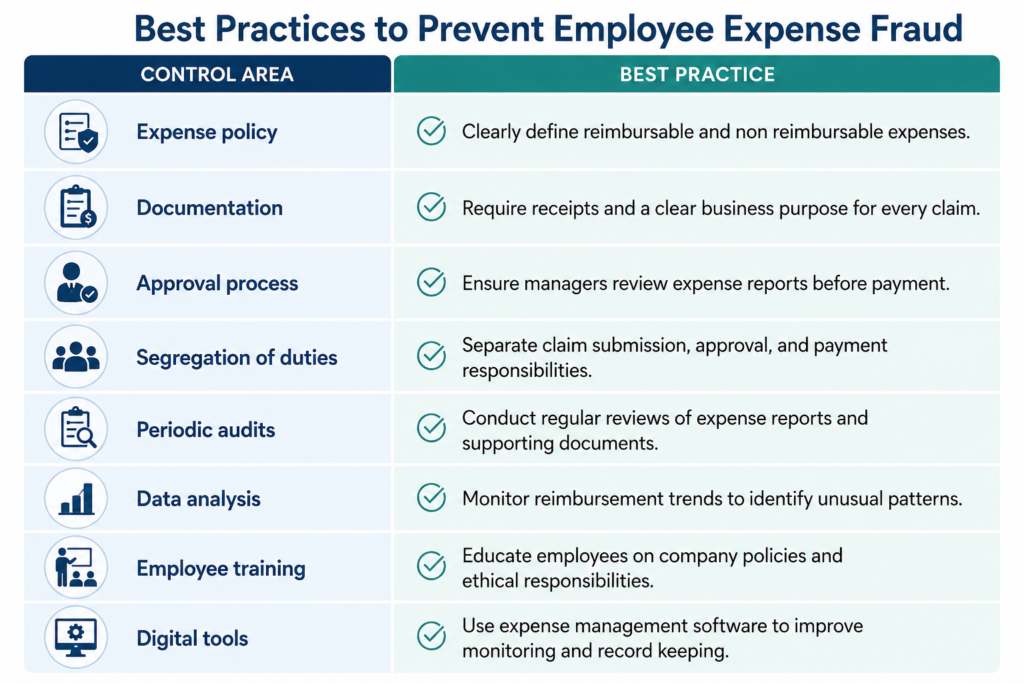
How Businesses Can Reduce the Risk

Strong internal controls are the most effective way to reduce expense fraud. Organizations should establish clear procedures and ensure that employees understand reimbursement requirements.

Some recommended practices include:

Develop a Clear Expense Policy

Every organization should maintain a written expense reimbursement policy that explains eligible expenses, spending limits, approval requirements, and documentation standards. Employees should understand what is permitted before submitting claims.

Require Complete Documentation

Expense claims should always be supported by original receipts, invoices, or other relevant documents. Each claim should clearly explain the business purpose of the expense.

Strengthen the Approval Process

Managers should carefully review expense reports instead of approving them automatically. Higher value claims should require additional approval from senior management.

Perform Regular Reviews

Finance teams should periodically review expense reports to identify unusual trends, duplicate claims, or repeated policy violations. Regular monitoring helps detect problems before they become significant.

Use Technology

Expense management software can automate approval workflows, identify duplicate claims, maintain electronic records, and improve reporting accuracy. Automation also reduces manual errors.

Educate Employees

Employees should receive regular training on expense policies, ethical conduct, and the consequences of submitting false reimbursement claims. Awareness plays an important role in fraud prevention.

Expense Fraud Prevention Checklist Conclusion

Individual expense fraud aggregates into massive financial losses and breaks down internal controls. Companies can mitigate this risk by combining strict documentation policies, robust manager approval workflows, and independent audits. Additionally, fostering an ethical workplace culture builds long term transparency and trust. Ultimately, a transparent reimbursement process protects resources, drives accountability, and supports long term financial growth. 

Read more

Why Companies Go Bankrupt Despite Showing Profits

Why Profit Alone Cannot Keep a Business Alive

Many people mistakenly believe that making a profit guarantees a company’s financial health, but profitable businesses fail every year due to a critical misunderstanding: profit and cash are not the same thing. While profit is an accounting measure showing revenue minus expenses on paper, cash is the actual money available to pay daily obligations like salaries, rent, and taxes. A business can report high profits because it books revenue before customers actually pay, yet it will quickly face financial distress or bankruptcy if it lacks the liquid cash to cover its immediate bills. Therefore, business owners and investors must prioritize liquidity alongside profitability to ensure long term survival.

A Simple Example

The Pizza Shop Example

Imagine you sell $10,000 worth of pizzas to a school for a big party on credit.

  • The Income Statement: Your ingredients and labor cost $7,000. On paper, you made a healthy $3,000 profit.
  • The Cash Reality: The school will not pay your invoice for 60 days, so you collect $0 cash today.
  • The Crisis: Your ingredients supplier and staff demand their $7,000 payment immediately.

Even though you are profitable, you face a $7,000 cash shortage and could go out of business tomorrow because you cannot pay your immediate bills.

Why Profitable Companies Still Go Bankrupt

1. Poor Cash Flow Management

Cash flow is often described as the lifeblood of every business.

A company may generate healthy profits but still fail if cash is not managed properly. When money enters the business more slowly than it leaves, financial pressure builds quickly.

Common warning signs include:

  • Late Supplier Payments: Delaying bills due to missing funds.
  • Payroll Struggles: Finding it difficult to pay employee salaries on time.
  • Overdraft Reliance: Frequently using bank overdrafts to survive.
  • Short-Term Debt: Depending on quick loans for routine expenses. 

2. Excessive Credit Sales

Offering generous credit terms boosts sales but creates severe liquidity gaps when customer payments take longer than supplier deadlines. For example, if customers pay in 120 days but suppliers demand payment in 30 days, the business must fund operations for 90 days out of pocket. As sales grow, more cash gets trapped in unpaid invoices, starving the company of the working capital needed to survive. 

3. Rapid Business Growth

Rapid expansion can accidentally destroy a business by burning through cash faster than it generates revenue.

The Cost of Growth

  • Upfront Expenses: Buying inventory and hiring staff before sales happen.
  • Infrastructure: Investing heavily in larger facilities and equipment early.
  • Delayed Returns: Paying immediate bills while waiting months for new customer cash.

Without strict cash planning, rapid growth creates a severe cash shortage that can cause bankruptcy. 

4. Excess Inventory

Unsold inventory traps vital cash inside the warehouse, severely hurting daily liquidity. 

Why Cash Gets Locked Up

  • Overstocking: Buying more products than the market demands.
  • Slow Items: Holding goods that take too long to sell.
  • Obsolescence: Storing outdated items that can no longer be sold.
  • Bad Forecasting: Misjudging future customer purchasing trends. 

Excessive inventory increases storage costs while starving the business of operational cash. 

5. Heavy Debt Obligations

Debt repayments can quickly consume a company’s available cash regardless of how healthy its profits look on paper. 

The True Cost of Debt

  • Principal: Repaying the original loan amount regularly.
  • Interest: Covering the ongoing cost of borrowing.
  • Fees: Paying bank charges and administration costs.
  • Covenants: Meeting strict financial compliance rules. 

If these fixed cash outflows outweigh incoming revenue, the business will face a severe liquidity crisis.

6. Delayed Customer Payments

Accounts receivable represent valuable future money, but you cannot use unpaid invoices to cover immediate expenses.

The Problem With Delayed Collections

  • Payroll: Employees still expect on time salaries.
  • Suppliers: Vendors still demand prompt payment.
  • Taxes: Government deadlines do not change.
  • Utilities: Monthly bills must be settled. 

As customers delay payments, paper wealth grows but actual cash shortages become severe.

7. Significant Capital Expenditure

Investing in long-term assets drains immediate cash reserves even though the expense is spread out over many years on paper. 

Where Cash Disappears

  • Equipment: Buying manufacturing machinery upfront.
  • Property: Purchasing or upgrading buildings.
  • Fleet: Acquiring delivery vehicles.
  • Tech: Funding information technology systems. 

While these purchases are recorded as assets and depreciated slowly, the massive initial cash outflow severely reduces daily liquidity.

8. Poor Working Capital Management

Working capital measures a company’s ability to meet its short term financial obligations.

Formula

Working Capital = Current Assets − Current Liabilities

Poor working capital management traps cash in non liquid assets, leaving profitable companies unable to pay daily bills. 

Key Operational Failures

  • Excessive Receivables: Letting customers delay invoice payments too long.
  • High Inventory: Overstocking goods that sit unsold in warehouses.
  • Low Cash: Failing to keep an emergency cash buffer.
  • Debt Reliance: Using expensive short term loans for routine costs. 

Without efficient management, working capital dries up and triggers operational failure. 

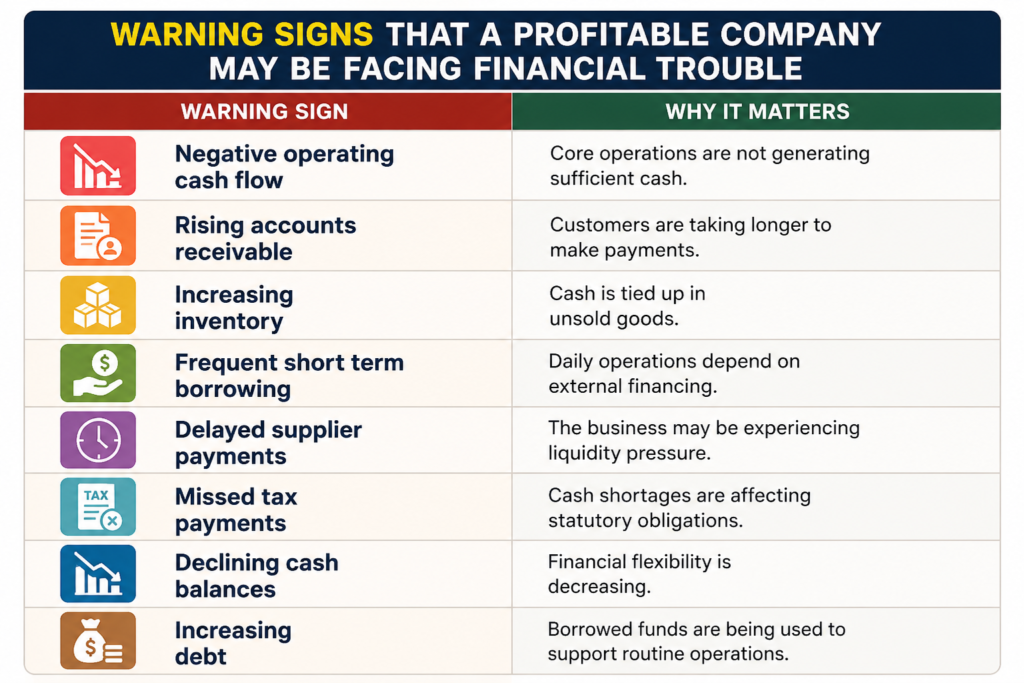
Warning Signs That a Profitable Company May Be Facing Financial Trouble

How Companies Can Prevent This Situation

Successful businesses monitor cash just as carefully as they monitor profit.

Effective Management Practices

  • Monthly Forecasting: Preparing detailed cash flow projections every single month.
  • Prompt Collection: Following up on overdue customer payments without delay.
  • Supplier Negotiation: Agreeing on favourable payment terms with vendors.
  • Emergency Reserves: Maintaining a cash buffer for unexpected expenses.
  • Inventory Control: Managing warehouse stock levels efficiently to avoid waste.
  • Debt Reviews: Checking borrowing levels regularly to keep loans manageable.
  • Ratio Monitoring: Tracking key liquidity ratios to measure financial health.
  • Cash Comparison: Comparing actual operating cash flow against reported profit.
  • Cross Department Unity: Improving coordination between finance, sales, procurement, and operations.

Why Strong Profits Do not Always Mean a Healthy Business

One of the biggest misconceptions in business is assuming that profit and cash flow are the same thing. While profitability measures how much a business earns after deducting expenses, cash flow reflects the actual movement of money into and out of the business. A company can report impressive profits on its financial statements yet struggle to pay salaries, suppliers, or loan installments if cash is tied up in receivables or inventory.

In today’s economic environment, investors, lenders, and business owners are placing greater emphasis on cash flow management than ever before. Businesses with consistent and predictable cash flow are considered more resilient because they can meet short term obligations, invest in growth opportunities, and navigate periods of market uncertainty without relying heavily on external financing.

Key Financial Metrics Every Business Should Monitor

Financial MetricFormulaPurpose
Operating Cash FlowReported  in the Cash Flow StatementMeasures cash generated from business operations.
Current  RatioCurrent Assets ÷ Current LiabilitiesEvaluates the ability to meet short term obligations.
Quick Ratio(Current Assets − Inventory) ÷ Current LiabilitiesMeasures immediate liquidity.
Days Sales  Outstanding(Accounts Receivable ÷ Credit Sales) × 365Shows the average time customers take to make payment.
Inventory Holding Period(Average Inventory ÷ Cost of Goods Sold) × 365Indicates how long inventory remains before being sold.
Days Payable  Outstanding(Accounts Payable ÷ Cost of Goods Sold) × 365Measures the average time taken to pay suppliers.
Cash Conversion CycleDays Sales Outstanding + Inventory Holding Period − Days Payable OutstandingMeasures how quickly cash invested in operations returns to the business. 

Best Practices for Finance Teams

Essential Best Practices

  • Rolling Forecasts: Preparing cash flow projections covering at least thirteen weeks.
  • Credit Reviews: Checking customer creditworthiness before extending terms.
  • Credit Limits: Establishing clear limits on how much customers can borrow.
  • Receivables Tracking: Monitoring overdue invoices on a regular basis.
  • Inventory Audits: Conducting periodic reviews of warehouse stock levels.
  • Debt Planning: Organizing loan repayments well in advance of deadlines.
  • Stress Testing: Simulating cash flow performance under different business scenarios.
  • Dual Reporting: Presenting profitability and cash flow reports to management.
  • Liquidity Monitoring: Checking key cash indicators monthly instead of just income.

Conclusion

Profitability is just paper performance, but cash is what keeps a business alive. A company will fail the moment it cannot pay its daily bills, no matter how high its reported profits look. Long term survival requires prioritizing actual cash flow, managing working capital tightly, and tracking liquidity to protect against economic uncertainty. 

The most important lesson is simple: Profit shows how well a business performs, but cash determines whether it survives.

Read more