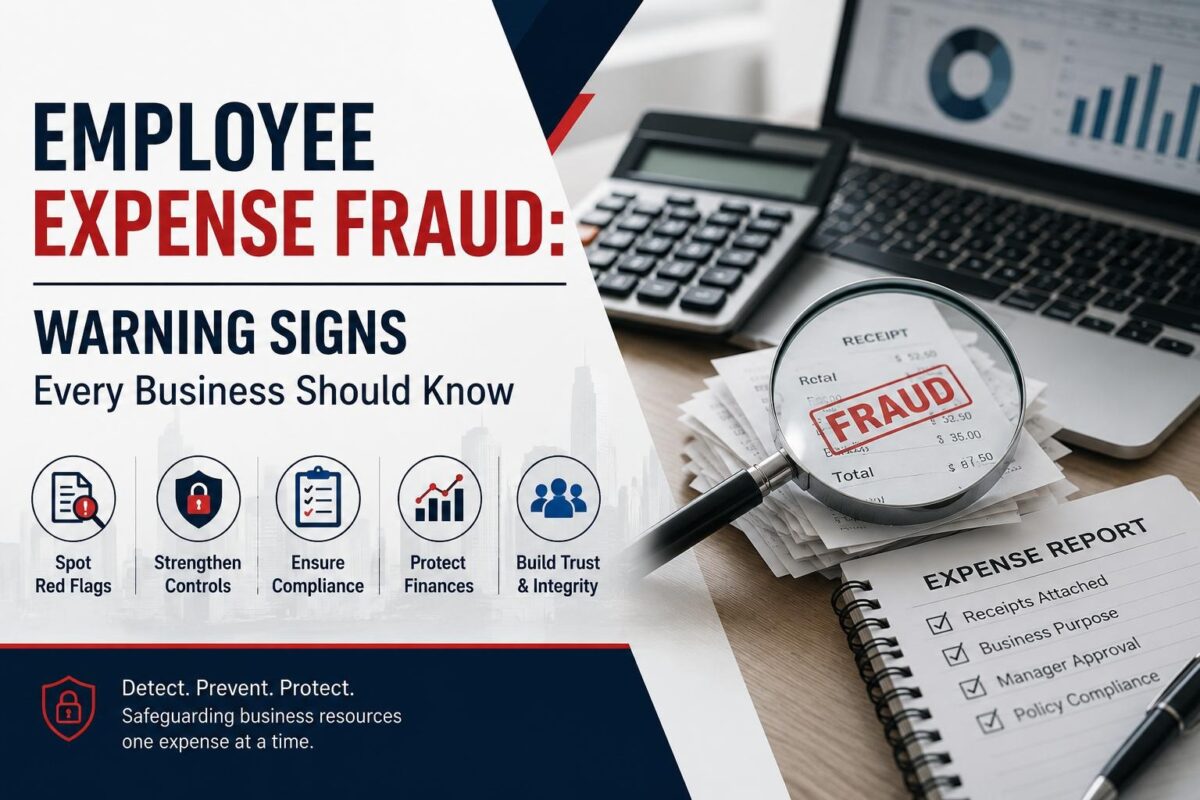
Employee expense reimbursements support smooth operations, but weak controls expose businesses to fraud. Expense fraud happens when employees intentionally submit false, inflated, duplicate, or unauthorized claims. While individual claims may seem small, repeated incidents lead to major financial losses and ruin organizational trust. Recognizing warning signs and enforcing strong controls protects resources and preserves an ethical culture.
What Is Employee Expense Fraud?
Employee expense fraud is the intentional act of claiming reimbursement for expenses that are inaccurate, exaggerated, or not related to legitimate business activities. Unlike genuine mistakes, expense fraud involves deliberate attempts to receive money that the employee is not entitled to.
Fraud can occur in organizations of any size. Businesses that rely on manual approval processes or have unclear reimbursement policies are often more vulnerable to such practices.
Common Types of Employee Expense Fraud
| Type of Fraud | Description |
| Fake receipts | Submitting receipts that have been created or altered to support a false claim. |
| Inflated expenses | Claiming a higher amount than the actual business expense. |
| Duplicate claims | Requesting reimbursement more than once for the same expense. |
| Personal expenses | Claiming personal purchases as business related expenses. |
| Mileage fraud | Reporting more travel distance than actually covered. |
| Unauthorized purchases | Purchasing items that are outside company policy and seeking reimbursement. |
| Entertainment abuse | Claiming excessive client entertainment expenses without sufficient business purpose. |
| Ghost expenses | Claiming reimbursement for meetings or trips that never took place. |
Why Expense Fraud Matters
Expense fraud causes deep operational and cultural damage that extends far beyond the stolen funds. When left unchecked, it erodes internal compliance frameworks, normalizes unethical behavior, and shatters mutual trust between leadership and staff.
Expanded Key Impacts:-
1. Direct & Compounded Financial Loss
- Immediate Cash Leakage: Capital flows directly out of the organization to fund personal lifestyles, non-existent clients, or inflated travel upgrades.
- Budget Distortion: Departments operate on inflated expense baselines, which artificially shrinks the budget available for genuine growth, hiring, or raises.
- Opportunity Cost: Every rupee or dollar lost to fraudulent claims is capital that cannot be reinvested into research, development, or revenue-generating projects.
2. Wasted Operational Time
- Administrative Bottlenecks: Finance, HR, and legal teams are forced to shift focus away from strategic planning to conduct manual, retrospective data matching.
- Protracted Investigations: Resolving a single disputed claim requires hours of interviewing staff, pulling bank statements, and coordinating with vendors.
- Managerial Distraction: Frontline managers spend critical operational hours scrutinizing routine receipts rather than driving team productivity and core business goals.
3. Spike in Compliance Costs
- External Audit Penalties: Discovery of systemic fraud triggers deeper, more aggressive forensic audits from external firms, significantly increasing standard annual fees.
- Regulatory Fines: Failure to maintain accurate financial records can violate corporate governance laws, resulting in severe financial penalties from regulatory bodies.
- Remediation Expenses: Companies must frequently hire external risk consultants to redesign fractured internal controls and deploy expensive automated expense software.
4. Cultural Erosion & Low Morale
- The “Contagion” Effect: When fraudulent behavior goes unpunished, it signals to other staff members that cheating the system is an acceptable way to increase compensation.
- Resentment Among Honest Staff: High performing, ethical employees feel demoralized and undervalued when they follow rules while peers benefit from dishonesty.
- Atmosphere of Suspicion: Overcorrecting with hyper restrictive policies creates a low-trust environment, making legitimate employees feel monitored and micromanaged.
5. Severe Reputation Damage
- Loss of Investor Confidence: Shareholder and investor trust plummets when news breaks that a company cannot protect its own cash flows from internal theft.
- Talent Acquisition Hurdles: Top tier job candidates actively avoid organizations associated with weak ethics, public scandals, or toxic corporate cultures.
- Client Alienation: B2B clients and partners may terminate lucrative contracts out of fear that the company’s lack of integrity extends to its client deliverables and billing.
Warning Signs of Employee Expense Fraud
Finance teams should monitor expense reports carefully for unusual patterns. One unusual claim may not indicate fraud, but repeated irregularities deserve further review.
| Warning Sign | Why It May Require Attention |
| Frequent round figure expenses | Actual business expenses rarely occur in exact round numbers. |
| Missing supporting documents | Lack of proper evidence makes verification difficult. |
| Duplicate receipts | The same receipt may have been submitted multiple times. |
| Expenses close to approval limits | Employees may attempt to avoid additional approval requirements. |
| Unusually high travel costs | Spending exceeds normal business requirements. |
| Frequent cash expenses | Cash transactions are generally harder to verify. |
| Repeated claims from the same vendor | May indicate fabricated or repeated transactions. |
| Claims submitted long after the expense date | Delayed submissions may make verification moredifficult. |
Behavioral Red Flags
Financial records alone do not always reveal expense fraud; employee behavior often provides crucial clues. While these behavioral indicators do not automatically prove guilt, they strongly justify a closer review.
Behavioral Warning Signs:-
- Document Issues: Frequently losing receipts or demanding urgent payouts without paperwork.
- Defensive Reactions: Becoming hostile or avoiding questions about travel and meetings.
- Policy Deviations: Regularly requesting exceptions or submitting unusually high claims.
- Vague Explanations: Providing inconsistent stories for business expenses.
How Businesses Can Reduce the Risk
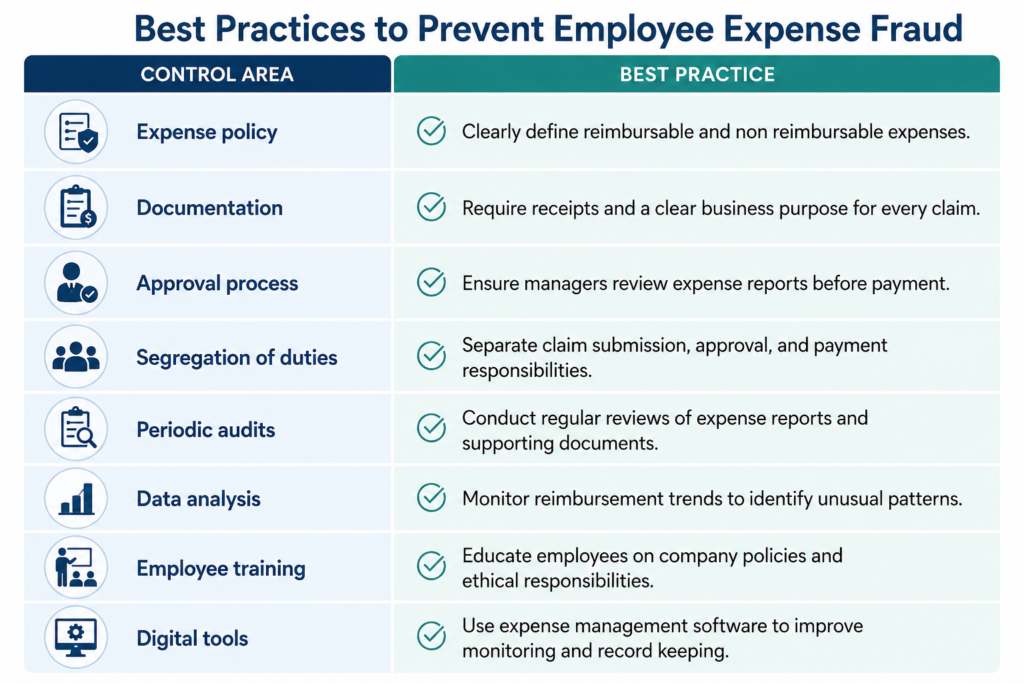
Strong internal controls are the most effective way to reduce expense fraud. Organizations should establish clear procedures and ensure that employees understand reimbursement requirements.
Some recommended practices include:
Develop a Clear Expense Policy
Every organization should maintain a written expense reimbursement policy that explains eligible expenses, spending limits, approval requirements, and documentation standards. Employees should understand what is permitted before submitting claims.
Require Complete Documentation
Expense claims should always be supported by original receipts, invoices, or other relevant documents. Each claim should clearly explain the business purpose of the expense.
Strengthen the Approval Process
Managers should carefully review expense reports instead of approving them automatically. Higher value claims should require additional approval from senior management.
Perform Regular Reviews
Finance teams should periodically review expense reports to identify unusual trends, duplicate claims, or repeated policy violations. Regular monitoring helps detect problems before they become significant.
Use Technology
Expense management software can automate approval workflows, identify duplicate claims, maintain electronic records, and improve reporting accuracy. Automation also reduces manual errors.
Educate Employees
Employees should receive regular training on expense policies, ethical conduct, and the consequences of submitting false reimbursement claims. Awareness plays an important role in fraud prevention.
Expense Fraud Prevention Checklist Conclusion
Individual expense fraud aggregates into massive financial losses and breaks down internal controls. Companies can mitigate this risk by combining strict documentation policies, robust manager approval workflows, and independent audits. Additionally, fostering an ethical workplace culture builds long term transparency and trust. Ultimately, a transparent reimbursement process protects resources, drives accountability, and supports long term financial growth.