Skip to main content Skip to search

Archives for January 2026

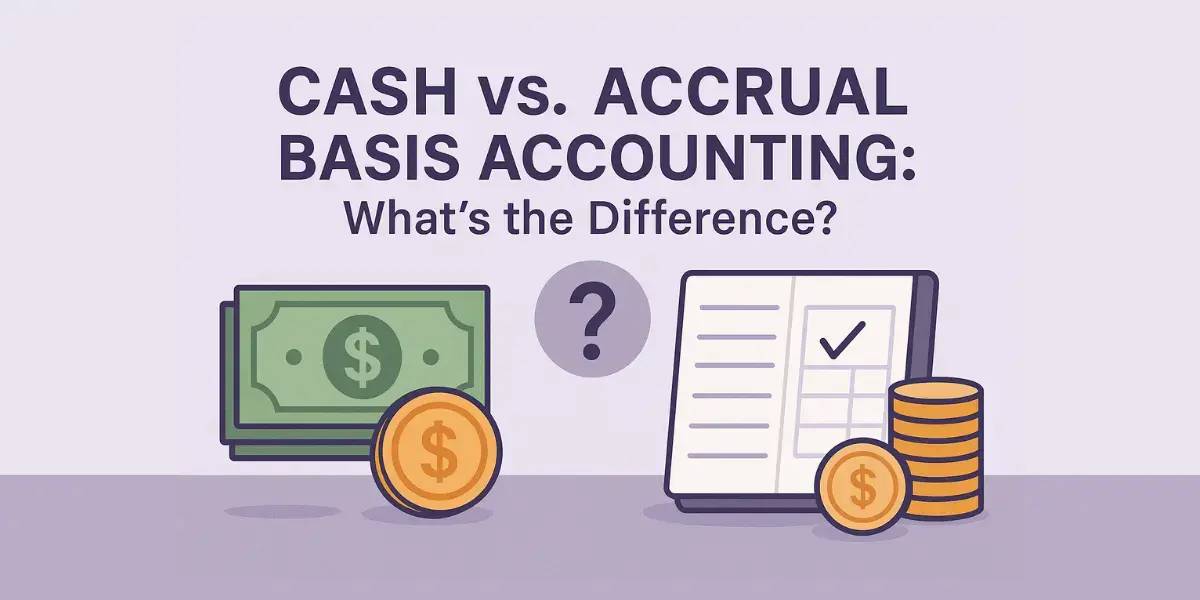
Understanding Accrual and Cash Accounting Methods for Business Expansion

As businesses grow, financial tracking becomes crucial, impacting decisions, compliance, funding, and scalability. Accrual and cash accounting methods influence profitability, tax management, and expansion planning. The right choice at the right time enhances operational clarity and financial control.

The Core Logic Behind the Two Methods

Cash accounting records transactions only when cash actually moves income when received and expenses when paid.
Accrual accounting, on the other hand, records income when it is earned and expenses when they are incurred, regardless of when cash changes hands.

How Each Method Reflects Business Reality 

This comparison highlights why many growing businesses eventually transition away from cash accounting as operations become more layered.

What Growing Businesses Prefer and Why

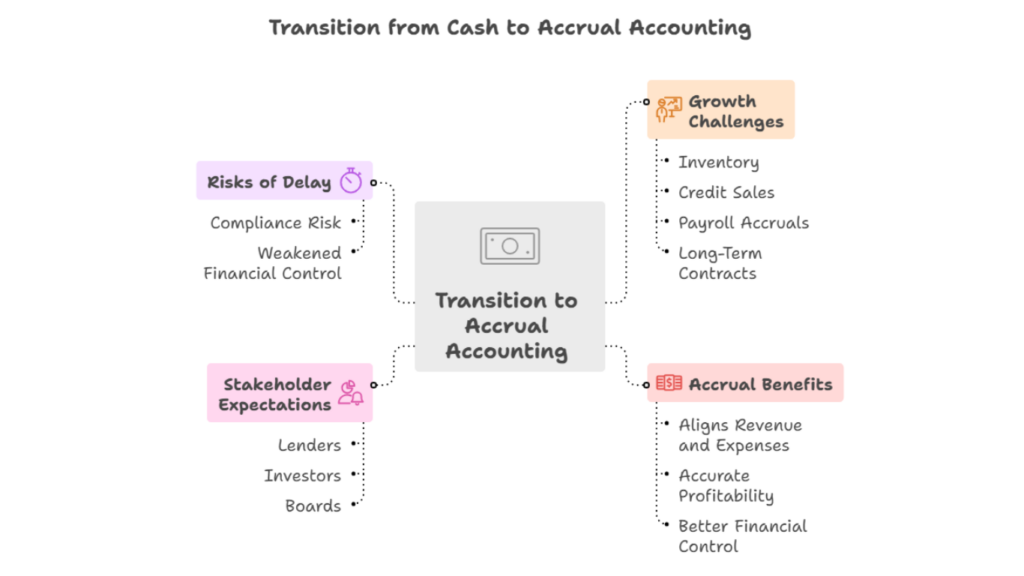
As businesses scale, their preferences tend to shift for practical reasons:

  • They need visibility into unpaid invoices and upcoming liabilities
  • They require accurate profit measurement, not just cash balance
  • They seek easier access to funding and investor confidence
  • They must comply with formal reporting standards

For these reasons, accrual accounting becomes the preferred method once operational complexity increases.
Why Early Stage Businesses Lean Toward Cash Accounting 

Startups and small businesses often prefer cash accounting because:

  • It is easy to understand and implement
  • It mirrors bank balance movements
  • It requires minimal accounting expertise

At this stage, simplicity often outweighs analytical depth.

Implementation Challenges Businesses Often Underestimate 

Challenge AreaCash Method ImpactAccrual Method Impact
System SetupMinimalRequires structured processes
Staff ExpertiseBasic accounting knowledgeTrained accounting professionals
Ongoing MaintenanceLowModerate to high
Error RiskLower complexityHigher if unmanaged

Understanding these challenges helps businesses prepare for a smooth transition rather than reacting to compliance pressure later.

Accrual Accounting as a Growth Enabler 

Accrual accounting supports expansion by enabling:

  • Revenue matching: Income is aligned with related expenses
  • Financial forecasting: Future cash flows become visible
  • Operational control: Payables and receivables are tracked
  • External credibility: Financials align with professional standards

This makes accrual accounting a preferred model for businesses planning long term scalability.

The Compliance and Regulatory 

Tax authorities in many places, like the U.S., permit small businesses below certain revenue limits to use the cash method of accounting. However, businesses with inventory, varied income sources, or external reporting needs usually must use accrual accounting. Accrual accounting also produces financial statements that better match GAAP and IFRS, making them suitable for audits, investors, and lenders.

 Impact on Performance Interpretation

Under AAP:

  • Profit reflects actual business activity
  • Management can evaluate trends and margins
  • Growth decisions are data-driven

Under cash accounting:

  • Profit fluctuates with payment timing
  • Performance may appear distorted

Long-term planning becomes difficult

Conclusion

Choosing between cash and accrual accounting affects a business’s finances, growth, and communication. Cash accounting is straightforward and shows immediate cash flow but is less detailed for complex businesses. Accrual accounting, by matching revenues and expenses, better shows profitability, which is vital for growth, funding, or meeting regulations. Growing businesses often need to update their accounting method.

Reference:

FinCEN – Beneficial Ownership Information Reporting (FinCEN.gov)


Read more

A Comprehensive Guide to Real Estate Financial Statements and Performance Analysis

Financial statements are essential for assessing the financial well being and operational success of businesses centered on property. In contrast to industries driven by individual transactions, the performance of these businesses is shaped by enduring assets, consistent revenue generation, the way they are financed, and continuous operating expenditures. Consequently, financial reporting serves not merely as a regulatory obligation but as a fundamental pillar for strategic choices, future planning, and expansion initiatives. 

For stakeholders to derive genuine benefit from financial statements, they need to grasp the organization of the figures, their operational implications, and their relationship to overall business outcomes. This guide aims to elucidate these aspects in a clear and applicable manner, empowering readers to interpret financial information with assurance and a defined objective.

The Financial Statements That Define Real Estate Performance

Real estate financial performance is evaluated through three primary statements, each serving a distinct purpose:

  • The Income Statement highlights operating performance over a specific period.
  • The Balance Sheet presents financial position at a point in time.
  • The Cash Flow Statement explains how cash moves through the business.

Together, these statements provide a complete financial picture. Reviewing one without the others often leads to incomplete or misleading conclusions.

Income Statement: Understanding Property Level Profitability

To interpret a real estate income statement effectively, readers should focus on the flow of profitability rather than just the final net income figure:

  1. Revenue Generation – Primarily rental income and property-related fees.
  2. Operating Expenses – Costs required to maintain and operate the property.
  3. Operating Results – Profitability before financing and non-operational items.

This structure helps distinguish between property performance and financing decisions, which is a critical distinction in real estate analysis.

 Understanding Financial Position Through Structure

ComponentFinancial Meaning
AssetsResources controlled by the business
LiabilitiesFinancial obligations and commitment
EquityResidual value after obligations

This structure explains how resources are funded and how value is distributed over time.

Profit vs Cash: Why the Numbers Do not Always Match

It is common for a business to appear profitable on paper while experiencing cash constraints. This disconnect arises from timing differences, loan repayments, and capital expenditures that do not immediately affect reported income.

Understanding cash movement is essential for evaluating sustainability, not just profitability.

 Performance Indicators Used in Real Estate Financial Analysis

Certain metrics are widely used to evaluate real estate performance:

  • Net Operating Income (NOI): Reflects operational profitability before financing.
  • Operating Expense Ratio: Measures cost efficiency.
  • Cash Flow from Operations: Indicates liquidity strength.

These indicators help stakeholders compare performance across properties and time periods.

 Balance Sheet Perspective: Properties, Liabilities, and Equity

AreaWhat It Represents in Real Estate
AssetsProperties, improvements, cash
LiabilitiesLoans, mortgages, payables
EquityOwner’s interest over time

Cash Flow Realities in Real Estate Operations

Profitability does not always align with cash availability in real estate. A property may show strong income while experiencing cash constraints due to loan repayments, capital expenditures, or timing differences in collections.

This is why the cash flow statement plays a vital role in performance analysis. It highlights whether operations generate sufficient cash to support ongoing obligations and future investments, independent of accounting profits.

Turning Financial Data Into Strategic Insight

Financial statements offer the greatest worth when they function as instruments for understanding rather than mere records. Properly organized and carefully analyzed, they illuminate performance, identify potential dangers, and aid in strategic development. 

A consistent method of financial reporting leads to improved decision-making, enhanced monitoring, and sustained assurance in financial results.

Why Accurate Bookkeeping Is the Backbone of Real Estate Statements

Explain:

  • How poor bookkeeping affects reports
  • Why clean books lead to better decisions
  • How consistency supports scalability

How Accountants Add Value Beyond Report Preparation

Discuss:

  • Interpretation
  • Compliance support
  • Investor-ready reporting

This positions your firm as more than data processors.

Conclusion:

Real estate financial statements are not fixed documents but rather dynamic instruments that showcase operational rigor, financial well being, and prospective opportunities. When they are produced with accuracy and interpreted properly, they offer understanding, aid in strategic planning, and facilitate assured choices. A systematic method for financial reporting converts data into valuable understanding, empowering real estate ventures to function with enhanced oversight, openness, and financial certainty.

Reference:

Financial Accounting Standards Board (FASB)

Accounting Standards Codification – Financial Statement Presentation

https://www.kariwala.pro/services/accounting/

Read more

Why Beneficial Ownership Reporting Has Become a Core Concern for Accounting Professionals

Why a “Non-Tax” Rule Has Suddenly Become an Accounting Firm Problem

Starting in January 2024, the reporting obligations for Beneficial Ownership Information (BOI) under the U.S. Corporate Transparency Act (CTA) have subtly altered discussions between business proprietors and their financial advisors. What was initially conceived as a measure to combat money laundering and bolster national security has, by chance, become a responsibility for CPA firms, bookkeeping departments, and accounting consultants, frequently without a clear designation of who is accountable.

What Beneficial Ownership Reporting Really Is (And Why Clients Do not get It)

Beneficial Ownership Reporting requires certain U.S. entities to disclose information about individuals who ultimately own or control the company to the Financial Crimes Enforcement Network.

The client confusion stems from three core issues:

  • It is not a tax filing
  • It does not go to the IRS
  • It applies even to small, inactive, or closely held companies

From a client’s perspective, this feels contradictory:

“We’ve already filed with the state, filed taxes, and disclosed owners to banks—why again?”

For accountants, the challenge is translating a legal compliance obligation into language that business owners can understand without providing legal advice.

 What Accountants Should Track vs. What Lawyers Handle

Accountants (CPA Firms)Lawyers / Legal Advisors
Collect and maintain beneficial ownership data provided by clientsInterpret legal definitions of substantial control and ownership thresholds
Track changes in ownership, officers, and control personsAdvise on complex ownership structures, trusts, and nominee arrangements
Assist with compliance timelines and reporting readinessDetermine exemptions, dispute-related ownership, and legal risks
Ensure records align with regulatory filing requirementsHandle enforcement issues, penalties, and legal representations

The Risk Zone for CPA Firms: Where Good Intentions Create Liability

This topic becomes serious because missteps can expose CPA firms to professional risk.

Key risk areas accountants are navigating:

  • Interpreting “substantial control” without legal authority
  • Advising on ownership thresholds incorrectly
  • Filing on behalf of clients without engagement clarity
  • Missing updates when ownership changes
  • Assuming responsibility by “helping informally”

Many firms are discovering that doing nothing creates client dissatisfaction but doing too much creates liability.

How BOI Reporting Is Affecting Day-to-Day Accounting Engagements

This requirement is already changing how accounting firms operate, even when they are not filing reports themselves.

Practical impacts include:

  • Increased onboarding questions for new clients
  • Additional entity level documentation requests
  • Client emails and calls outside engagement scope
  • Time spent explaining rules that are not billable

For firms offering outsourced accounting or compliance support, this adds advisory pressure without defined compensation.

Common Client Misunderstandings (and Why They Ask Accountants)

Client QuestionUnderlying Confusion
Do I have to file this?Lack of awareness about CTA applicability.
What counts as ownership?Clients often think only direct shareholders matter, not control.
Am I exempt?Many exemptions exist, but clients assume they do not apply.
Will my accountant be considered an owner?Misunderstanding the beneficial owner definition. Accountants are usually exempt but clients fear otherwise.

Why This Topic Matters to CPA Firms

Most U.S. small businesses are encountering this reporting obligation for the first time and are unfamiliar with it. Studies indicate a considerable deficit in knowledge and comprehension, even among businesses mandated to comply, with numerous business owners uncertain if the regulation pertains to them. Consequently, clients are increasingly seeking advice from accountants and CPA firms, despite many of these business owners lacking a grasp of the requirements fundamentals or the data necessary for collection. This situates accountants in a distinctive role as both instructors and dependable consultants.

How CPA Firms Are Adapting Their Service Models

Forward-looking firms are responding strategically rather than reactively.

Some common approaches include:

  • Adding BOI discussions to onboarding checklists
  • Creating client FAQs or advisory memos
  • Offering BOI coordination services (not filing)
  • Partnering with legal professionals
  • Charging advisory fees for compliance education
  • Training staff to recognize red flag structures

This turns confusion into structured advisory value, not free support.

Final Perspective: A Compliance Rule That Redefined the Accountant’s Role

Beneficial Ownership Reporting highlights a broader shift in the profession:

Clients no longer see accountants as record keepers, they see them as compliance guides.

CPA firms that:

  • Set clear boundaries
  • Educate without overcommitting
  • Structure advisory support thoughtfully
  • Leverage internal and outsourced teams effectively

will turn this regulatory burden into trusted advisory positioning rather than professional risk.

Conclusion:

Modern CPA firms need robust documentation, clear client communication, and scalable compliance. Increasing regulations and complex client queries demand more than informal methods. Strong accounting operations ensure accuracy, timeliness, and regulatory trust. Structured support and disciplined delivery models enable CPA firms to prioritize advisory and client relationships while ensuring compliance, operational stability, and growth.

Reference:

Beneficial Ownership Information Reporting Rule Fact Sheet (FinCEN.gov) 


Read more

Latest Supply Chain Accounting Risks Highlighted by U.S. Government Reports (2024–2025)

Recent U.S. government reviews, regulatory briefings, and agency observations during 2024–25 have made one point clear: supply chain disruptions are no longer just operational issues, they are accounting and financial reporting risks. From inventory valuation errors to disclosure failures and forecasting distortions, supply chain instability is now directly impacting how U.S. companies prepare, audit, and rely on their financial data.

This shift has major implications for CFOs, CPAs, controllers, auditors, and offshore accounting teams supporting U.S. businesses.

Why CPA Firms Cannot Ignore Supply Chain Risks Anymore

Recent U.S. government reports from 2024–25, issued by entities like the GAO, SEC, and PCAOB, have unequivocally demonstrated that disruptions in supply chains now pose a significant financial reporting and auditing risk, extending beyond mere operational concerns. Consequently, accounting firms are facing growing expectations to pinpoint, assess, and address the accounting implications stemming from supply chain volatility. For CPA firms that cater to businesses involved in manufacturing, distribution, retail, or import reliant operations, these risks are now surfacing directly within audit conclusions, client financial assessments, and consulting projects.

Mistakes in inventory valuation can directly expose CPA firms to audit risks

Supply chain disruptions have caused volatile material costs, freight surcharges, and supplier price resets. CPA firms are now encountering inventory balances that fail LCM, NRV, or impairment tests.

How CPA firms are affected

  • Increased audit adjustments and post close corrections
  • Higher risk of inventory overstatement findings

More time spent defending valuation assumptions with regulators and lenders

How CPA firms can resolve this
CPA firms should lead clients toward:

  • Periodic inventory remeasurement (not annual only testing)
  • Clear valuation policies aligned with ASC 330
  • Documented assumptions supporting management estimates

Key Supply Chain Accounting Risk Areas Identified by U.S. Authorities (2024–25)

In 2024–25, U.S. government and oversight reports indicate that supply chain disruptions primarily manifest as accounting risks via issues with inventory valuation, inconsistent cost assignments, untrustworthy vendor information, delayed recording of expenses, and compromised financial projections. These vulnerabilities significantly impact an organization’s preparedness for audits, the precision of its financial statements, and the effectiveness of management’s strategic choices, thereby becoming a paramount concern for accounting departments and CPA firms assisting American enterprises.

Working Capital Stress: A Hidden Accounting Exposure

Supply Chain IssueAccounting ImpactBusiness Consequence
Over-stocking to avoid shortagesHigher inventory carrying valueCash flow pressure

Delayed supplier deliveries
Accrued liabilities misalignedVendor disputes
Advance payments to suppliersPrepaid expense complexityLiquidity risk
Slow-moving inventoryHigher write-down riskReduced ROA

Regulatory Scrutiny Is Expanding CPA Responsibilities

The PCAOB and SEC have increased attention on supply chain related audit risks.

CPA firm implication

  • Expanded audit scope
  • Higher documentation standards
  • Greater professional judgment exposure

Firm-level response
Standardizing audit programs around supply chain risks and enhancing staff training is now essential.

Disclosure & Going Concern Pressure on CPA Firms

U.S. regulators now expect enhanced disclosures around supply chain dependency.

CPA firm challenge

  • Determining when supplier concentration becomes a material risk
  • Evaluating disclosure adequacy under SEC scrutiny
  • Aligning footnotes with actual financial exposure

How CPA firms add value
By guiding clients on:

  • Risk focused disclosures
  • Dependency analysis
  • Consistency between MD&A and financial statements

This strengthens both compliance and investor confidence.

Disclosure Expectations Are Rising

The SEC has emphasized transparency around supplier concentration and supply chain dependency. This aligns with disclosure guidance discussed in the Journal of Accountancy.

CPA responsibility
Firms must evaluate:

  • Whether supply chain risk is material
  • Adequacy of footnote disclosures
  • Consistency between MD&A narratives and financial data

This has expanded the CPA’s role from preparer to risk evaluator.

 Why This Matters to Offshore Accounting Teams

While India has not issued a single consolidated supply chain accounting report like the U.S., Indian professionals supporting U.S. clients are directly impacted. Offshore accounting teams must:

  • Adjust inventory and cost models quickly
  • Support enhanced audit documentation
  • Track supplier-related cost changes accurately
  • Help U.S. firms meet rising disclosure expectations

For Indian accounting partners, understanding U.S. supply chain risk narratives has become essential, not optional.

Conclusion

Supply chain instability is a 2024-25 U.S. government reporting concern, impacting financial reporting beyond logistics. Businesses with misaligned accounting face increased audit risk, poor forecasts, and diminished stakeholder trust. CPA firms and accounting teams can help clients manage supply chain uncertainty for better financial clarity and control.

Reference:

U.S. Government Accountability Office (GAO) – Supply Chain Risk Management Reports


Read more