
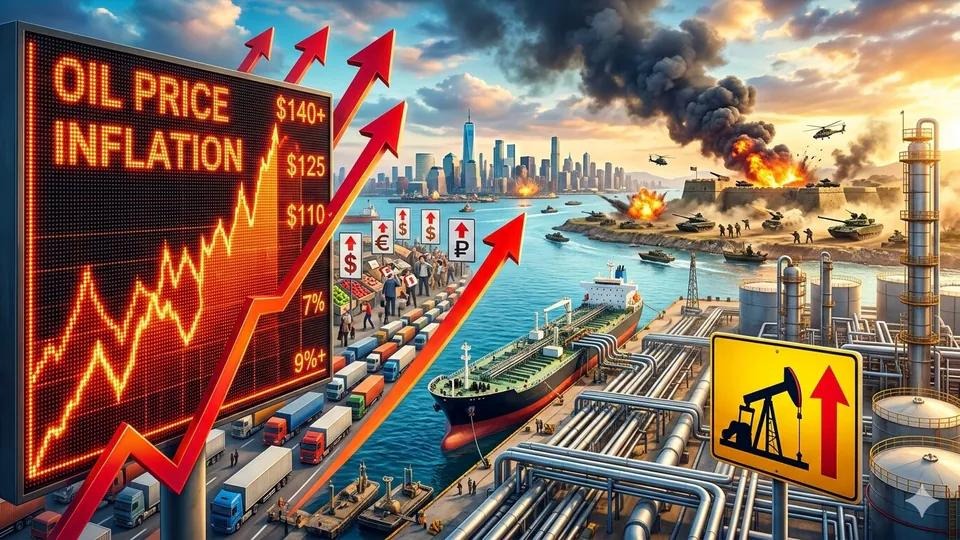
A Crisis That is Rewriting the Rules for CPA Firms
The ongoing geopolitical tensions involving the U.S. and the Middle East are not just global headlines, they are actively reshaping the financial ecosystem.For U.S. CPA firms, this is not a distant macro issue. It is a day to day operational challenge.Clients are uncertain. Costs are volatile. Regulations are tightening.
And in the middle of all this, CPA firms are expected to deliver more accuracy, faster insights, and stronger guidance than ever before.
The Shift: From Compliance Providers to Crisis Advisors
Traditionally, CPA firms focused on:
- Bookkeeping
- Tax compliance
- Audit support
But in today’s environment, clients expect:
- Real time financial insights
- Planning is based on scenario
- Decision support is based on risk
CPA firms are being pushed into a new role:
Financial crisis managers
How the Current Crisis Is Impacting U.S. CPA Firms
1. Increased Client Uncertainty and Delayed Decision-Making
During geopolitical instability:
- Businesses delay investments
- Expansion plans are paused
- Financial decisions become conservative
Impact on CPA firms:
- Slower advisory engagements
- Reduced consulting revenue
- Clients favor cautious approaches.
2. Rising Complexity in Financial Reporting
Conflict driven volatility affects:
- Oil prices
- Exchange rate of currency
- Supply chain costs
This leads to:
- Frequent changes in financial assumptions
- Increased need for adjustments, estimates, and disclosures
- Higher risk of misstatements
CPA firms now spend more time ensuring:
✔ Accurate valuations
✔ Proper disclosures
✔ Compliance under uncertain conditions
3. Pressure on Audit and Compliance Work
In uncertain environments:
- Regulators increase scrutiny
- Auditors demand stronger documentation
- Risk assessments become more detailed
CPA firms face:
- Longer audit cycles
- Higher workload without proportional fee increases
- Increased liability risks
4. Client Cash Flow Stress and Fee Pressure
As businesses face:
- Rising costs (fuel, logistics, imports)
- Reduced margins
- Tight liquidity
They push back on:
- Professional fees
- Billing timelines
- Scope of services
CPA firms are forced to:
- Do more work
- With tighter margins
- Under higher expectations
5. Surge in Demand for Advisory Services (But With Challenges)
While traditional services face pressure, demand increases for:
- Risk advisory
- Scenario planning
- Cash flow forecasting
- Cost optimization
However:
- Clients expect faster turnaround
- Require real time insights
- Demand deeper analysis
This creates a capacity challenge for CPA firms.
The Core Problem: The Traditional CPA Model Is Under Stress
The current environment exposes a structural issue:
CPA firms are built for stability
But are now operating in constant disruption
This mismatch creates:
- Delivery not in time
- Reduced service quality
- Limited scalability
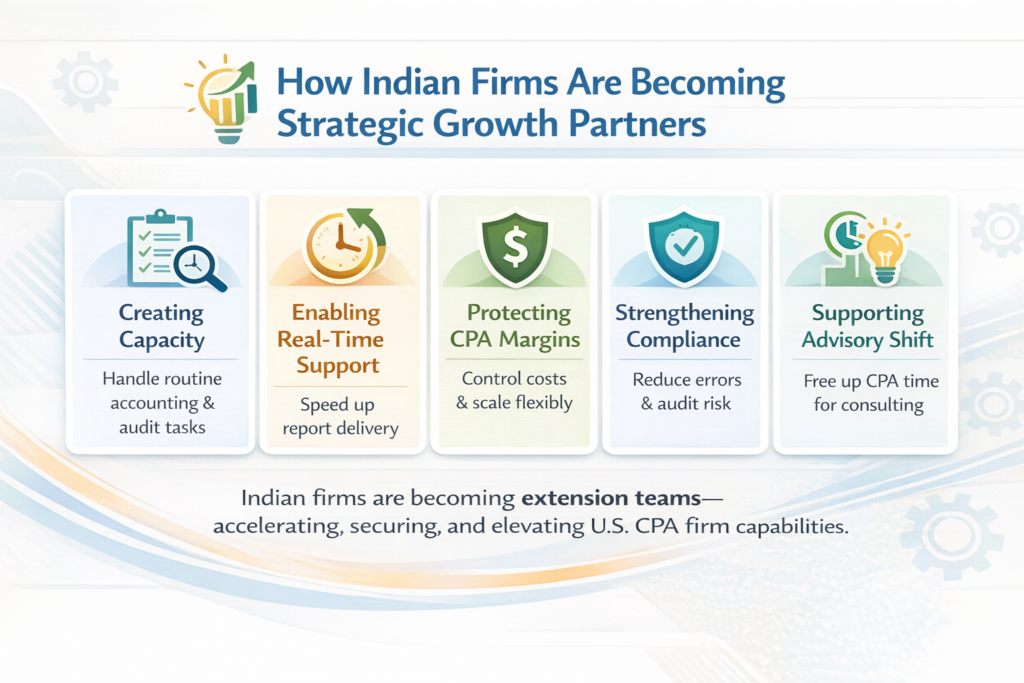
How Indian Firms Are Becoming Strategic Growth Partners
Why This Trend Is Accelerating Now
The current geopolitical crisis is acting as a catalyst.
It is forcing CPA firms to:
- Rethink their operating models
- Increase efficiency
- Build resilience
And offshore collaboration is becoming a core strategy not a backup option
The Bigger Picture: From Cost Saving to Value Creation
Earlier the outsourcing was about:
✔ Reducing costs
Now, it is about:
✔ Increasing capacity
✔ Improving turnaround time
✔ Enhancing service quality
✔ Enabling strategic growth
Conclusion: A Structural Shift in How CPA Firms Operate
The ongoing global conflict is speeding up long term changes for the U.S. CPA firms. With increasing financial complexity and changing client demands, firms can not just use old methods relying on internal resources. Agility, scalability, and quick responses are now essential. Indian accounting firms are becoming vital partners, assisting U.S. CPAs with workload, accuracy, and better services without sacrificing efficiency. What used to be outsourcing is now a core operational strategy.
Firms adapting to this change will be better prepared for uncertainty, profitability, and leadership in a complex world.