
Skip to main content Skip to search

Archives for Bookkeeping

Difference Between Accounts Payable and Accounts Receivable

Financial Reporting Risks from Improper Revenue Recognition

Revenue is a key performance metric in U.S. businesses, directly impacting profitability, valuation, investor confidence, and regulatory compliance.Errors in revenue recognition, whether intentional or procedural, present significant risks to financial reporting.

Under U.S. GAAP (ASC 606), revenue must be recognized when performance obligations are satisfied and control is transferred, not merely when cash is received. Noncompliance can result in misstated financial statements, regulatory scrutiny, audit findings, and diminished valuation.

What This Topic Really Means

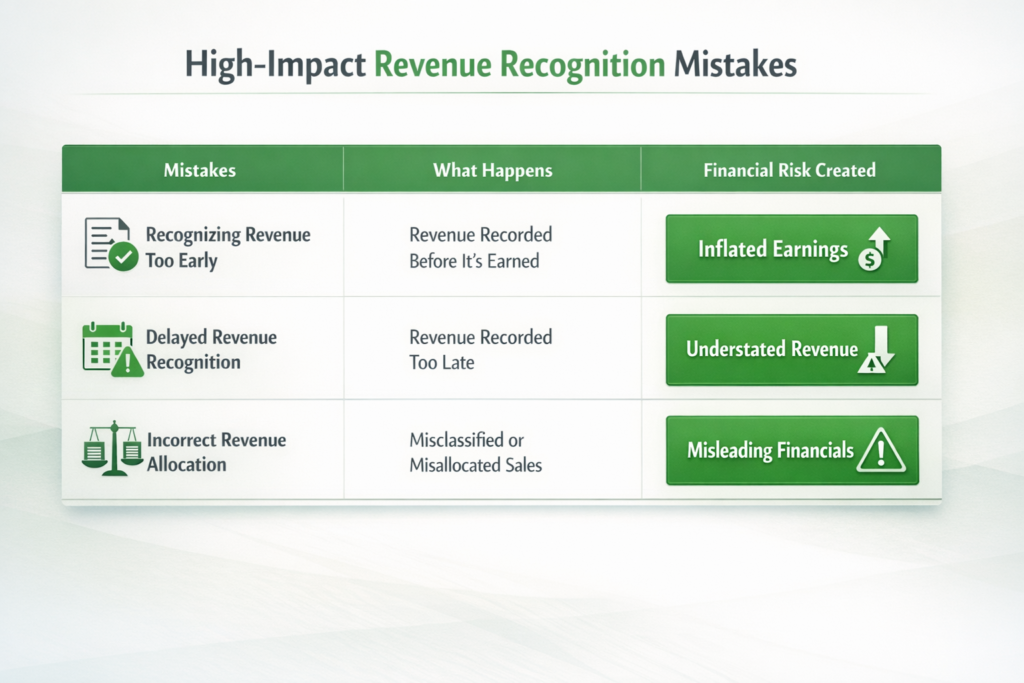
Improper revenue recognition includes:

  • Recording revenue prematurely
  • Delaying revenue recognition
  • Misclassifying revenue streams
  • Recognizing revenue without fulfilling performance obligations
  • These practices result in financial statements that do not accurately reflect the economic reality of the business.

Behavioral Red Flags Inside Organizations

Improper revenue recognition is often driven not only by technical gaps but also by behavioral factors.

Common internal patterns include:

  • Pressure to meet quarterly financial targets
  • Lack of coordination between sales and accounting teams
  • Overreliance on manual adjustments
  • Weak internal control review processes
  • These behaviors increase the likelihood of both intentional and unintentional misstatements.

The Real Problem: Timing vs. Economic Reality

At its core, improper revenue recognition is a timing issue:

  • Early billing
    • Business practice: Recognize immediately
    • U.S. GAAP requirement: Recognize when earned
  • Advance payments
    • Business practice: Treat as revenue
    • U.S. GAAP requirement: Record as liability
  • Long-term contracts
    • Business practice: Recognize upfront
    • U.S. GAAP requirement: Recognize over time
  • Bundled services
    • Business practice: Lump sum recognition
    • U.S. GAAP requirement: Allocate across obligations
  • The disconnect between cash flow and revenue recognition is the underlying cause of most reporting risks.

The 5 Step Revenue Recognition Model (U.S. GAAP – ASC 606)

Businesses are required to follow a structured framework:

  1. Identify the contract with a customer
  2. Identify performance obligations in the contract
  3. Determine the transaction price
  4. Allocate the transaction price to performance obligations
  5. Recognize revenue when performance obligations are satisfied

Stakeholder Impact Breakdown

1. Business Owners

  • Improper revenue recognition creates a misleading view of growth
  • Leads to flawed strategic decisions
  • Results in potential future corrections

2. Investors and Buyers

  • Increases perceived risk
  • Often results in:
    • Lower valuation multiples
    • Extended due diligence timelines
    • Deal renegotiations

3. CPA Firms and Auditors

  • Increases audit complexity
  • Requires:
    • Additional testing procedures
    • Revenue restatements
    • Enhanced compliance reporting

High Impact Revenue Recognition Mistakes
Advanced Risk Scenarios

  1. Multi-Element Arrangements
    Bundled service offerings often create challenges in properly allocating revenue across performance obligations.
  2. Variable Consideration
    Discounts, incentives, and rebates are frequently overlooked, resulting in overstated revenue.
  3. Contract Modifications
    Contract changes are not consistently updated in accounting systems, leading to reporting inconsistencies.
  4. Cutoff Errors
    Revenue recognized in the incorrect period remains one of the most common audit findings in the United States.

How to Fix and Prevent Revenue Recognition Errors (Step-by-Step)

Step 1: Standardize Contracts
Ensure all contracts clearly define deliverables and payment terms.

Step 2: Apply ASC 606 Consistently
Train teams to rigorously follow the five-step revenue recognition model.

Step 3: Automate Revenue Tracking
Implement accounting systems that align revenue recognition with performance obligations.

Step 4: Perform Monthly Reviews
Conduct regular reviews of revenue entries and reconciliations.

Step 5: Maintain Documentation
Retain complete audit trails for all revenue transactions.

Case Insight

A U.S.-based SaaS company recognized annual subscription revenue upfront instead of over the subscription period.

Issue:
Revenue was overstated by 25%

Action Taken:
Revenue was restated in accordance with ASC 606
Financial statements were corrected

Result

Initial valuation declined
Transaction was delayed but ultimately completed after correction

Why This Matters for Business Valuation
Revenue serves as the foundation for EBITDA and valuation multiples. When revenue is overstated:

1.EBITDA (Earnings Before Interest, Taxes, Depreciation, and Amortization) becomes     unreliable

2.Buyers apply valuation discounts
3.Transactions may fail during due diligence

In many U.S. transactions, revenue-related adjustments are among the primary drivers of valuation reductions.

Conclusion

Accurate revenue recognition reflects true business performance. Improper practices introduce hidden risks that impact financial reporting, investor confidence, and valuation. A disciplined, GAAP compliant approach to revenue recognition builds a strong financial foundation for sustainable growth.

References:

Financial Accounting Standards Board (FASB)
ASC 606: Revenue from Contracts with Customers
Core framework for revenue recognition in the United States

Link:

Read more

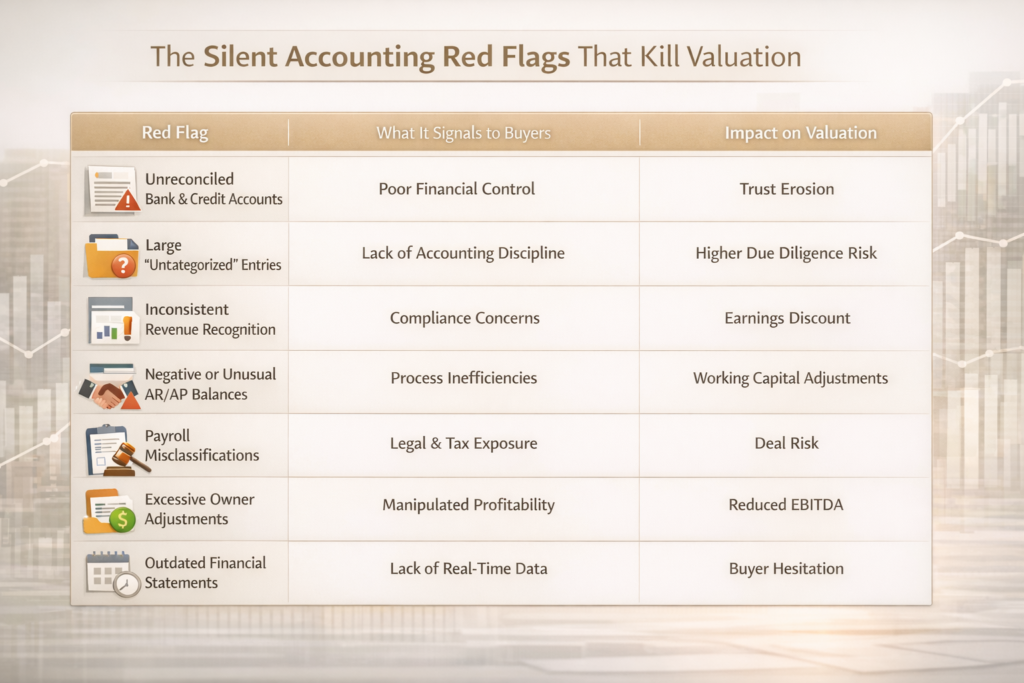
Exit-Ready Books: The Accounting Red Flags That Quietly Destroy Your Business Valuation

Business owners aim for a successful exit at maximum valuation, not just profit. Financial records are key to trust, whether via acquisition, private equity, or merger. Many businesses have hidden accounting issues that are not apparent in daily work but can detail deals during due diligence. Exit ready books are crucial.

These are accurate, transparent, and audit ready, meeting valuation expectations. Without them, profitable businesses risk valuation discounts, delays, or failed deals.

What Are Exit Ready Books?

Exit ready books are financial records that are:

  1. Fully reconciled and accurate
  2. Compliant with US GAAP principles
  3. Free from inconsistencies and unexplained balances

They ensure that when a buyer reviews your financials, they see confidence not confusion.

Why Exit Readiness Matters More Than You Think

Most business owners prepare for an exit too late but often when a buyer is already involved.

By then, issues like:

  1. Unreconciled accounts
  2. Revenue inconsistencies
  3. Poor documentation

Key Impact:

  1. Lower valuation multiples
  2. Increased due diligence timelines
  3. Higher risk perception for buyers

In competitive deals, clean books can increase valuation by 10–30%, while messy books can reduce it just as quickly.

Deep Dive: How These Red Flags Destroy Value

1. Unreconciled Accounts

When accounts do not match bank statements, buyers assume:

  • Transaction is missing
  • Potential fraud happened
  • Controls of internal system is weak

This leads to immediate valuation skepticism.

2. Revenue Recognition Issues

Incorrect revenue timing violates US GAAP principles.

Buyers often:

  • Recalculate revenue
  • Adjust EBITDA downward

This directly reduces your valuation multiple.

3. Poor Accounts Receivable Management

Unclear AR aging or unapplied cash signals:

  • Weak collections
  • Inflated revenue

Result: Buyers apply bad debt discounts.

4. Payroll & Compliance Risks

Misclassifying employees vs contractors can trigger:

  • IRS penalties
  • Legal exposure

Buyers may pause or restructure the deal.

Stakeholder Impact Analysis

For Business Owners

Messy books mean:

  • Lower exit price
  • Longer deal cycles
  • Lost negotiation power

For Buyers & Investors

Red flags increase:

  • Risk perception
  • Audit effort
  • Need for price adjustments

For CPA Firms & Advisors

Poor bookkeeping:

  • Increases cleanup workload
  • Damages credibility during due diligence

Exit Readiness Checklist

To make your books exit ready, focus on the following:

Core Financial Hygiene

  • Monthly bank and credit card reconciliations
  • Clean general ledger with zero suspense balances
  • Accurate chart of accounts

Revenue & Expense Accuracy

  • GAAP compliant revenue recognition
  • Clear expense categorization
  • Removal of duplicate or personal expenses

Working Capital Clarity

  • Clean Accounts Receivables aging (no unapplied cash)
  • Accurate Accounts payable tracking
  • Inventory reconciliation

Compliance & Documentation

  • Payroll properly classified
  • Tax filings aligned with books
  • Supporting documentation for all entries

Before vs After: The Valuation Difference

ScenarioBefore CleanupAfter Exit-Ready Books
Financial AccuracyQuestionableVerified & reliable
Buyer ConfidenceLowHigh
Due Diligence TimeExtendedStreamlined
Valuation MultipleDiscountedOptimized
Deal Closure ProbabilityUncertainStrong

Case Insight

A mid-sized US service business approached a buyer with:

  • $5M reported revenue
  • Unreconciled accounts
  • $300K in unclear adjustments

After cleanup:

  • Revenue was restated to $4.6M
  • EBITDA became more credible
  • Buyer confidence increased

Final Result:

  1. Deal closed successfully
  2. Valuation improved due to transparency not inflated numbers

Why It Matters for Growing Businesses

Exit readiness is not just for companies planning to sell.

It helps in:

  1. Raising capital
  2. Securing loans
  3. Attracting investors
  4. Scaling operations confidently

In short, exit-ready books are equal to business ready books.

Conclusion

Financial credibility drives business valuation. Hidden accounting issues, even in profitable firms, can reduce offers due to buyer uncertainty during due diligence. Exit-ready financial records, ensuring accuracy and transparency, expedite deals, enhance negotiation, and boost valuation. Buyers assess your number’s integrity, not just growth. Well-organized financials build credibility for a better exit and higher value.

References:

  1. Financial Accounting Standards Board (FASB)
  2. American Institute of Certified Public Accountants (AICPA)

Read more
Difference Between Accounts Payable and Accounts Receivable

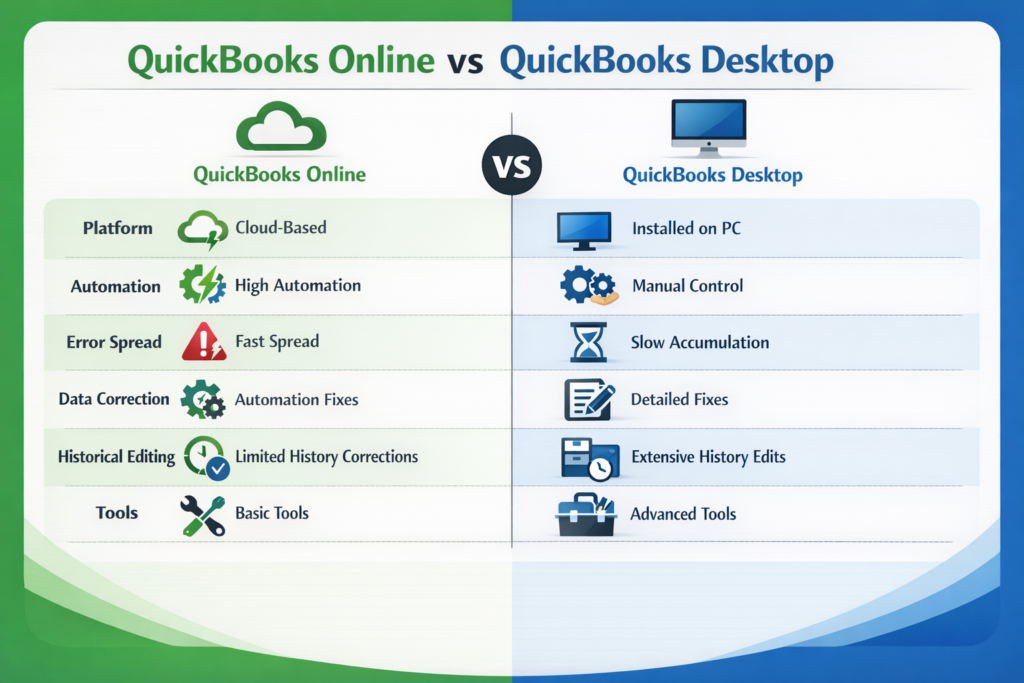
QuickBooks Online vs QuickBooks Desktop Cleanup: A Structured Guide to Restoring Accurate Financial Records

Why QuickBooks Cleanup Becomes Necessary

As companies grow, change accountants, or outsource bookkeeping, their QuickBooks files can develop errors like duplicate entries, incorrect balances, uncleared transactions, and automation issues. These inaccuracies hinder financial accuracy, complicating tax preparation, audits, and financial statement generation. A structured QuickBooks cleanup process identifies and corrects these issues, ensuring the system accurately reflects financial health. Both QuickBooks Online and Desktop require this cleanup, though methods differ due to their distinct designs and automation handling.

QuickBooks Cleanup Process: Step-by-Step Framework

A structured cleanup process typically follows these steps:

  1. File assessment and backup
  2. Review of chart of accounts
  3. Verification of opening balances
  4. Cleanup of duplicate and incorrect transactions
  5. Correction of automation rules (Online)
  6. Structural corrections and rebuild (Desktop)
  7. Sequential bank reconciliation
  8. Financial report verification

This systematic approach ensures complete restoration of accounting accuracy.

 Accessibility and Remote Working Capability

This subtopic explains how easily users can access QuickBooks and work remotely.

QuickBooks Online:
QuickBooks Online is a cloud-based accounting software accessible via a web browser from any location, supporting remote teams, external accountants, and businesses with multiple branches without requiring local software installation.

QuickBooks Desktop:
QuickBooks Desktop is installed on a local system. Access is limited to the computer where it is installed unless remote access tools or hosting services are used. This makes it less flexible for remote teams.

Why this matters:
Businesses with remote employees, outsourced accounting firms, or multiple locations benefit more from QuickBooks Online due to its accessibility.

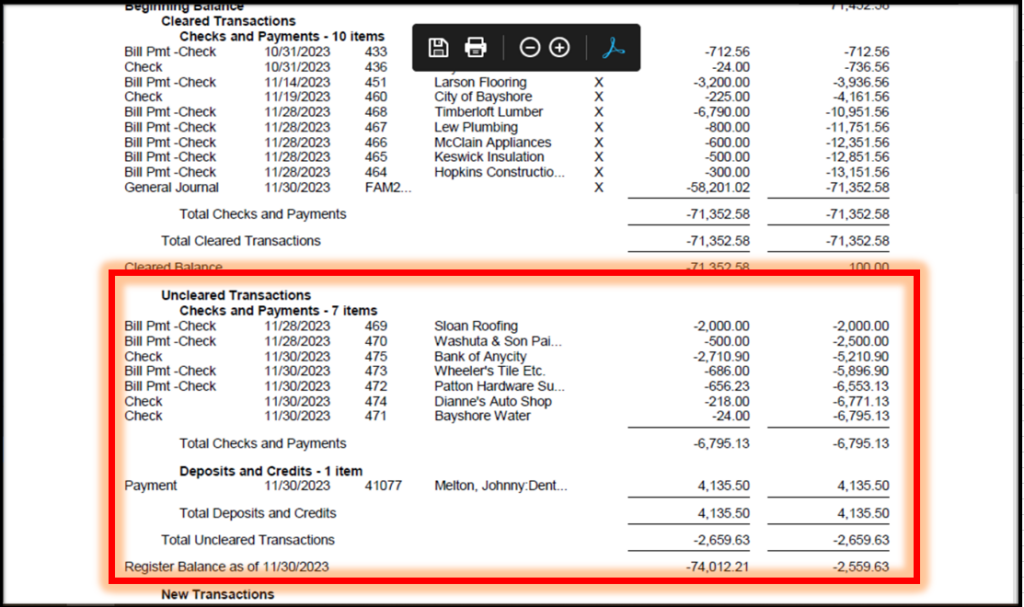
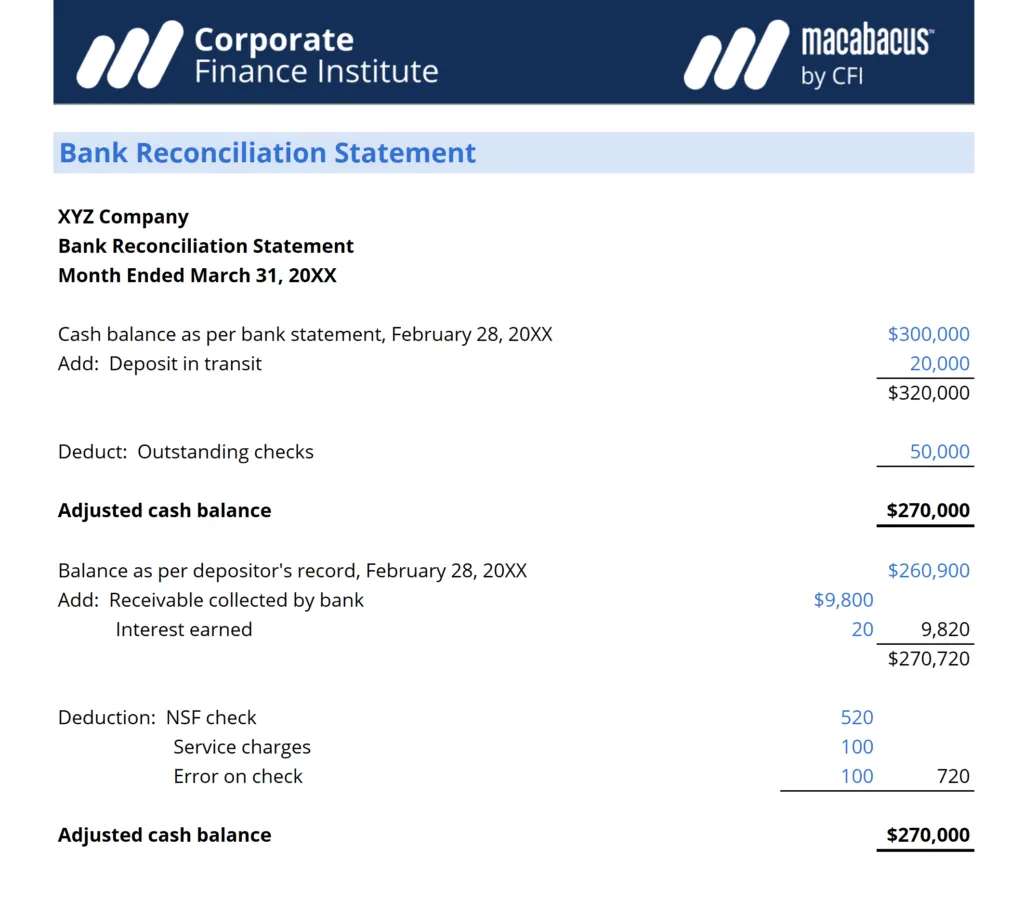
Bank Reconciliation Cleanup and Correction Process

Bank reconciliation is the foundation of accurate accounting.

Cleanup involves:

  • Identifying missing transactions
  • Removing duplicate entries
  • Correcting incorrect postings
  • Ensuring balances match bank statements

Reconciled transactions must never be deleted. Corrections should always address the original error rather than forcing adjustments.

Proper reconciliation ensures accurate financial reporting and audit readiness.

Data Backup, Security, and Risk Protection

This subtopic explains how financial data is protected in both versions.

QuickBooks Online:
QuickBooks Online automatically backs up data in secure cloud servers. It uses encryption, secure login, and advanced security layers. There is no risk of losing data due to system failure or hardware damage.

QuickBooks Desktop:
QuickBooks Desktop requires manual backups or scheduled backups. If backups are not maintained properly, there is a risk of data loss due to system crashes, hardware failure, or viruses.

Why this matters:
Automatic backups in QuickBooks Online provide better protection and reduce risk, while Desktop requires more manual responsibility.

Common Problems Identified During QuickBooks Cleanup

The most frequent issues found during cleanup include:

  1. Duplicate transactions from bank feeds
  2. Incorrect automation rules
  3. Unreconciled bank accounts
  4. Incorrect opening balances
  5. Payroll liability discrepancies
  6. Inventory valuation errors
  7. Improper use of undeposited funds
  8. Incorrect journal entries

These issues accumulate over time and reduce financial reliability.

Key Differences: QuickBooks Online vs Desktop Cleanup

Business Benefits of Proper QuickBooks Cleanup

Proper cleanup provides significant benefits:

  • Accurate financial reporting
  • Reliable tax filing
  • Audit readiness
  • Better business decision-making
  • Smooth outsourcing transition
  • Improved financial transparency

Clean books improve operational confidence and financial control.

When Professional Cleanup Support Is Recommended

Professional cleanup is necessary when:

  • Multiple years require correction
  • Reconciliations are incomplete
  • Financial reports are unreliable
  • Business is preparing for audit
  • Business is transitioning to outsourced accounting

Conclusion: 

QuickBooks cleanup ensures financial accuracy, reliable reporting, and readiness for compliance, audits, and growth. QuickBooks Online and Desktop need distinct cleanup methods due to their differing operations. Proper assessment, automation control, reconciliation maintenance, and error correction restore confidence in financial data, resolving current issues and building a foundation for sustainable financial management.

Reference:

Bank reconciliation and bookkeeping best practices

Read more

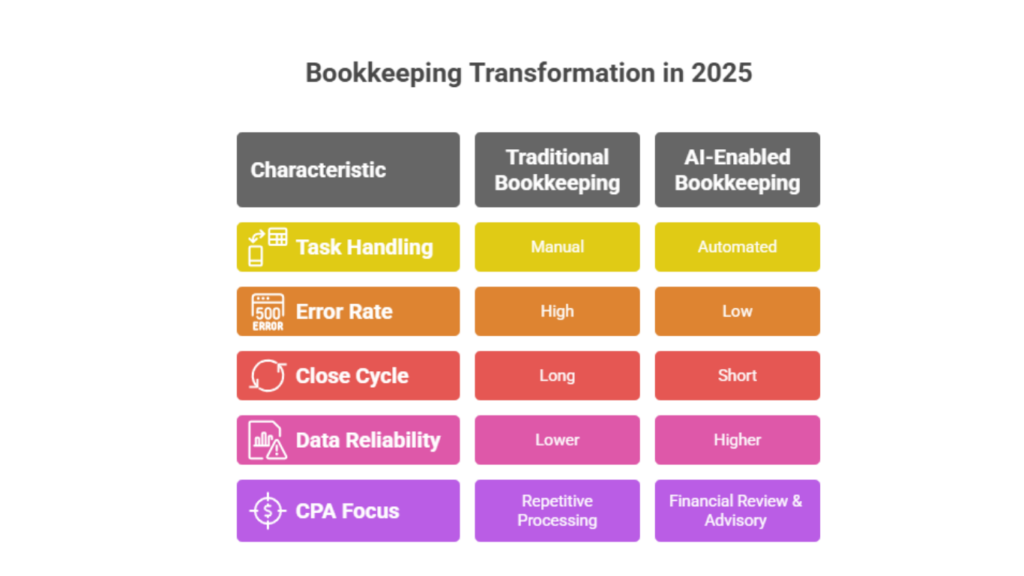
AI-Driven Bookkeeping: What U.S. CPAs Are Adopting in 2025

Introduction: 

By the year 2025, bookkeeping practices in the United States have advanced significantly beyond simple manual reconciliation and automated processes based on fixed rules. Artificial intelligence has become an integral part of everyday accounting tasks, not to substitute Certified Public Accountants CPA’s but rather to enhance their productivity and improve accuracy. CPA firms across the U.S. are progressively implementing AI-powered bookkeeping systems to manage increasing transaction volumes, meet accelerated reporting deadlines, address heightened compliance requirements, and satisfy client needs for immediate financial data.

What AI-Driven Bookkeeping Really Means in Practice

AI-driven bookkeeping is not about “robots doing accounting.” Instead it refers to intelligent systems that learn from historical data, recognize patterns, and assist accountants in decision making.

Unlike traditional automation tools that follow fixed rules, AI systems:

  • Continuously improve with usage
  • Detect anomalies that humans may miss
  • Adapt to changing transaction behavior

For U.S. CPA’s this means bookkeeping systems that actively support accuracy, compliance, and advisory work rather than simply recording data.

Shift from Data Entry to Financial Oversight

American CPA firms are shifting from bookkeeping models that rely heavily on entry-level staff to workflows centered on review processes. The standardization of routine recording tasks is enabling professionals to dedicate more effort to verifying financial data, spotting discrepancies, and offering clients guidance on cash flow and performance patterns.

This shift improves quality control and reduces dependency on repetitive manual work, especially during month-end and year-end closes.

Key Areas Where U.S. CPAs Are Using AI in 2025

1. Intelligent Transaction Classification

AI automates transaction categorization in bookkeeping. By analyzing vendor behavior, past coding, descriptions, amounts, and timing, AI systems accurately classify transactions in 2025. Unlike older systems needing frequent rule changes, modern AI learns continuously, improving accuracy over time. This saves CPA firms review time and ensures consistency for clients, especially those with many transactions.

2. Continuous Bank and Credit Card Reconciliation 

AI has transformed reconciliation from a month end task into a continuous process:

  • Real-time matching of bank feeds with ledger entries
  • Identification of missing, duplicated, or unmatched transactions
  • Automated suggestions for corrections
  • Early detection of reconciliation discrepancies

This approach allows CPAs to identify issues earlier in the cycle rather than discovering problems weeks later.

3. Exception-Based Review Model 

U.S. CPA firms in 2025 are increasingly shifting to an exception based bookkeeping model, where humans focus only on what truly needs attention:

  1. AI processes and reviews 100% of transactions
  2. Normal, low risk entries pass through automatically
  3. High-risk or unusual items are flagged
  4. Accountants review only flagged exceptions

This model significantly improves productivity while preserving professional judgment where it matters most.

4. AI-Driven Error and Anomaly Detection 

Modern AI bookkeeping tools continuously monitor patterns in transaction frequency, amounts, vendors, and posting behavior. When unusual deviations occur  such as sudden expense spikes, duplicate invoices or irregular timing  the system alerts the accountant.

For CPAs, this reduces downstream audit issues and strengthens internal controls, especially for clients preparing for reviews, audits or investor reporting.

5. How Automated Invoice Handling Improves Day-to-Day Bookkeeping

AI tools now extract data from invoices, receipts, and statements, validate them against past records, and post entries with minimal human intervention.

Day-to-Day Bookkeeping Workflow in a Modern CPA Firm

  1. Transaction recording using standardized accounts
  2. Daily or weekly internal checks
  3. Periodic reconciliations (bank, AR, AP)
  4. Supervisor-level review and adjustments
  5. Client-ready financial reporting

This structure helps firms reduce errors while maintaining control at every stage.

Why CPA Firms Are Repositioning Bookkeeping as a Value Service

Bookkeeping is increasingly positioned as the foundation for advisory services. Clean, timely books allow CPAs to offer budgeting insights, cash flow forecasting, and performance reviews. Firms that recognize this are gaining stronger client relationships and recurring revenue.

AI-Driven Controls: Strengthening Accuracy and Compliance in Bookkeeping

Modern AI bookkeeping systems embed intelligent controls into daily operations. These systems flag duplicate entries, unusual transactions, vendor data errors, and policy violations before impacting financial statements. For U.S. CPA’s this means better internal review, stronger audit trails, and greater confidence in financial reporting. AI controls also help comply with evolving U.S. accounting standards by maintaining consistent, auditable data records.

Conclusion

AI-driven bookkeeping in 2025 reflects a fundamental shift in how U.S. CPA’s operate. By automating routine work, improving accuracy, and unlocking real-time insights, AI allows accounting professionals to focus on higher value analysis and advisory. The future of bookkeeping is not just automated  it is intelligent, proactive, and CPA led.

Reference:

Journal of Accountancy (AICPA) – AI applications in bookkeeping and accounting

Read more

Integrating ERP Systems with Accounting for Seamless Operations

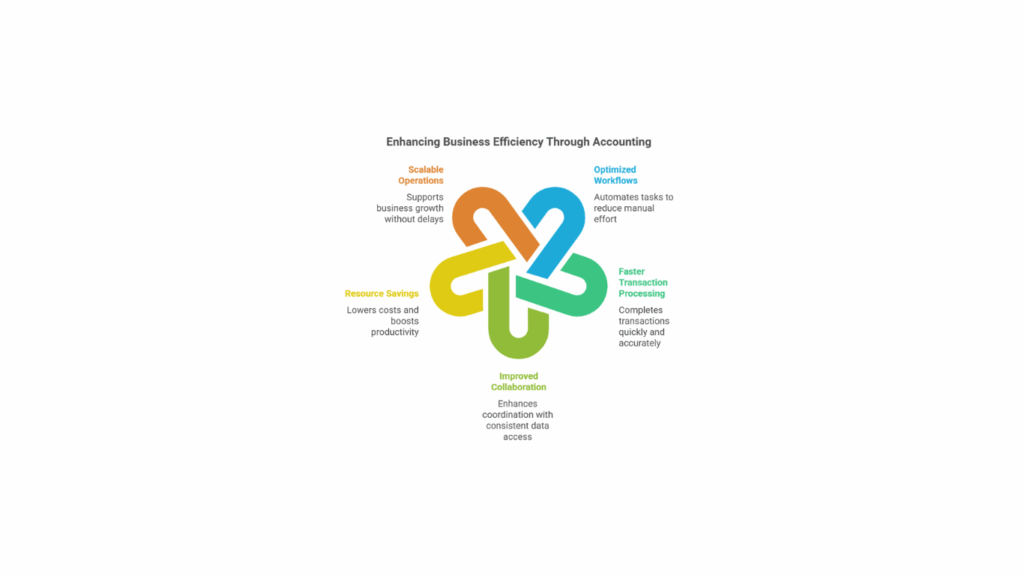
In today’s rapidly evolving business landscape, integration is not just a trend it’s a necessity. The days of operating multiple, disconnected systems for accounting, sales, inventory, payroll, and procurement are fading fast. For modern U.S. companies and CPA firms, connecting Enterprise Resource Planning (ERP) systems with accounting has become the cornerstone of achieving operational efficiency, transparency, and real-time insight. When financial data seamlessly flows across departments, businesses gain not only speed and accuracy but also the strategic advantage of making faster, smarter decisions.

The Power of Integration

The integration of ERP systems with accounting processes revolutionizes routine financial management. By connecting all divisions from sales through purchasing via a unified information platform, organizations encounter reduced mistakes and accelerated operational flow. Rather than depending on hand-processed reconciliations, financial transactions are updated instantaneously and automatically, providing immediate insight into the company’s fiscal status.

The Core Idea: Unifying Operations and Finance

ERP systems function as the backbone of an organization, connecting various operations such as order processing, supply chain management, inventory control, human resources, and manufacturing. When combined with accounting functions, this integrated framework guarantees that all business activities are immediately captured in the financial documentation.

To illustrate, when a purchase order is approved, it simultaneously updates stock levels, creates accounts payable entries, documents expenditures, and generates accounting entries instantaneously. This process removes the need for manual input, minimizes mistakes, and maintains alignment between financial records and actual business operations. The result is a harmonized enterprise where the finance department doesn’t merely track figures but actively steers the organization using precise, up-to-date information.

Why Integration Matters to Businesses and CPA Firms

Enterprise Resource Planning and accounting system integration enables American corporations to transition from a reactive financial management approach to a proactive strategic methodology. Instead of deferring reconciliation processes until the conclusion of monthly reporting periods, financial professionals and departmental supervisors can conduct real-time monitoring of transactional activities, thereby facilitating immediate identification of emerging patterns, potential risks, and strategic opportunities. For certified public accounting firms servicing diverse client portfolios, such integration provides enhanced access to refined, contemporaneous data, expedited financial closing procedures, and superior accuracy in financial reporting documentation. This technological advancement empowers these professional service organizations to transcend traditional compliance-focused services and evolve toward comprehensive advisory consulting, thereby assisting clients in optimizing cash flow management, working capital efficiency, and overall organizational profitability.

Operational and Financial Benefits

Before IntegrationAfter ERP-Accounting Integration
Manual data entry & duplicationAutomated data flow between systems
High risk of errors & delayed closesReal-time updates & quicker closing cycles
Departmental silosUnified operational and financial data
Time-consuming reconciliationsInstant reconciliation and automated matching
Reactive decision-makingReal-time dashboards and proactive insights

This transformation isn’t just technological it’s strategic. By merging financial and operational visibility, companies eliminate delays, gain control, and build the foundation for scalability.

Strategic Implications for U.S. CPA Firms

Accounting firms across the United States are progressively implementing comprehensive solutions for their clientele to enhance operational effectiveness and precision. Through ERP system integration, accounting professionals eliminate the need to solicit numerous reports or await reconciliation processes, as they gain direct access to live data streams from their clients’ operational systems.This transformation minimizes reliance on manual processes, expedites monthly closing procedures, and enables firms to concentrate on consultative services including financial projections, budget planning, and strategic guidance instead of data correction activities. Essentially, ERP integration transforms the accountant’s function from a data recorder to a strategic business consultant.

Automating Workflows and Reducing Manual Overhead

Traditional manual procedures for data input, record alignment, journal entries, and account reconciliation present considerable challenges in terms of time consumption and susceptibility to errors. Through systematic integration, these operational workflows undergo automation: commercial transactions automatically generate corresponding financial records, stock movements seamlessly update both cost accounting and financial ledgers, and inter-organizational transactions achieve autonomous reconciliation. Comprehensive industry analyses demonstrate that Enterprise Resource Planning integrations substantially diminish manual data input requirements, thereby enhancing operational efficiency and minimizing error frequencies.

Through the elimination of repetitive tasks from finance personnel responsibilities, organizations can strategically reallocate human capital toward analytical functions, strategic consultation, and organizational enhancement initiatives. Within the context of Certified Public Accounting practices, this transformation enables more efficient portfolio management while delivering enhanced value propositions to clientele.

Expected Obstacles and Solutions for Managing Them

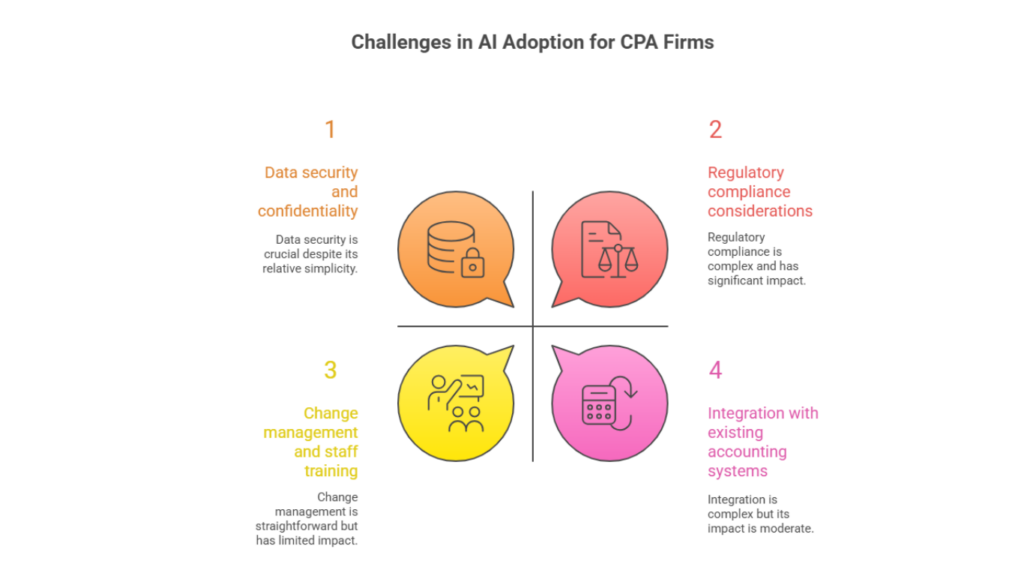
Naturally, integration does not occur automatically and is accompanied by inherent risks. Prevalent obstacles encompass: disparate master data elements (including customer records, vendor information, and accounting structures), incongruent process frameworks across organizational divisions (encompassing sales, finance, and operations), and organizational resistance from personnel accustomed to established operational procedures. Achievement depends upon meticulous master data remediation, comprehensive process documentation across business units, and systematic implementation progressing from fundamental modules to comprehensive deployment. Initial accomplishments establish organizational confidence; structured governance mechanisms ensure institutional responsibility.

Strengthening Compliance, Auditability and Internal Control

In the U.S., accounting teams face increasing regulatory scrutiny, audits, and governance expectations. An integrated ERP accounting environment enhances internal controls automatically: transactions are logged end-to-end, audit trails are comprehensive, and systemic deviations can be flagged via standardized workflows. 

For auditors or internal compliance teams, this unified architecture simplifies review the documentation is built in, the chain of events is traceable, and reconciliation is timely. The risk of non-compliance, adjustments, or manual errors is markedly reduced, thus elevating the credibility of financial reporting.

Future-Ready Finance: Scalable and Adaptive Systems

The integration of ERP and accounting systems establishes a crucial groundwork for emerging technologies such as artificial intelligence-powered forecasting, automated process robotics, and analytical prediction tools. When American companies expand their operations, these unified systems guarantee that financial procedures can accommodate growth while preserving precision, efficiency, and data protection throughout the entire process.

Integration Solutions: Key Insights

While the benefits are clear, successful integration demands disciplined execution. Key considerations include:

  • Ensuring data master-cleanliness: unified customer/vendor/ chart of accounts across systems  inconsistent masters lead to chaos.
  • Defining business process alignment: finance, operations and IT must agree on workflows, timing of postings, responsibilities and exceptions.
  • Phasing rollout smartly: start with core modules (finance + procurement + sales) then expand to advanced modules such as HR, manufacturing, CRM.
  • Monitoring metrics: track close-cycle time, reconciliation time, manual entry volume, error-rate these signal progress and areas for refinement.
  • Building change management and training: users must trust the integrated environment and abandon old work-arounds for maximum effect.

Conclusion

The incorporation of Enterprise Resource Planning systems with accounting functions transcends mere technological advancement, representing a strategic transformation toward more intelligent, expeditious, and transparent organizational operations. For United States enterprises, this integration facilitates immediate financial reconciliation, automated data precision, and perpetual fiscal oversight. For Certified Public Accounting practices, it delivers enhanced operational efficiency, instantaneous reporting capabilities, and the capacity to provide comprehensive analytical insights to clientele.

Kariwala & Co. LLP assists U.S. businesses and CPA firms with ERP-accounting integrations to streamline financial operations, boost efficiency, and enable better decision-making. We align technology with financial accuracy for real-time business insights.

Reference:

Management Accounting: Information for Decision-Making and Strategy Execution — Anthony A. Atkinson and Robert S. Kaplan

Read more

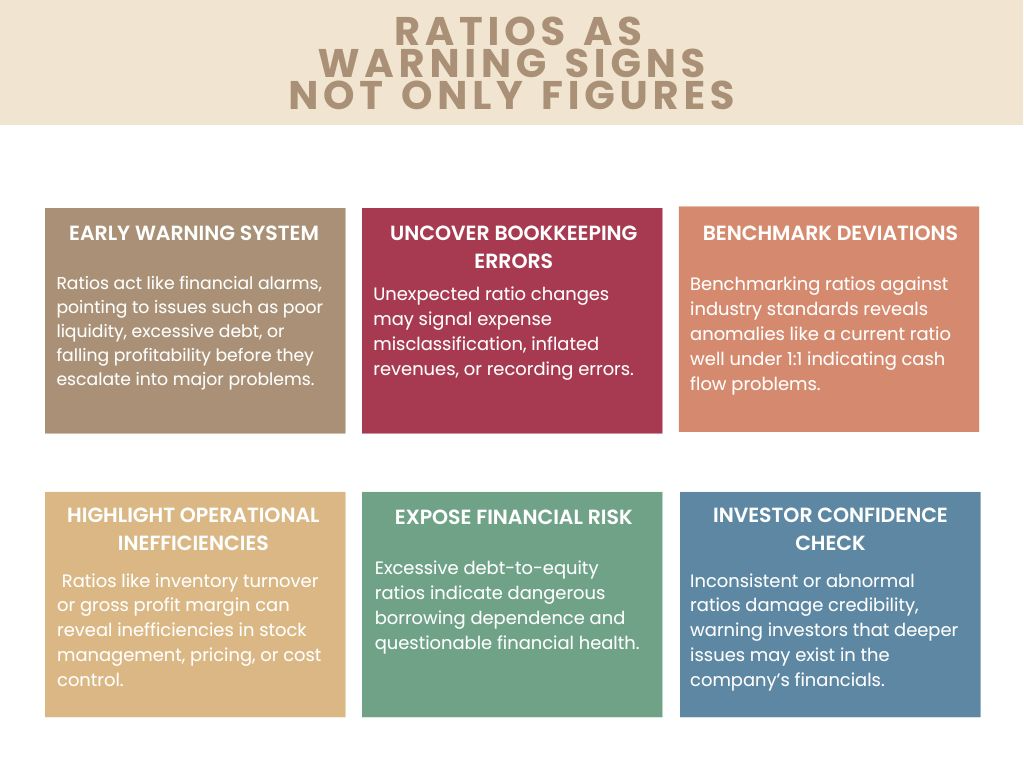
How to Spot Sneaky Bookkeeping Mistakes via Ratio Analysis

Accounting inaccuracies frequently remain undetected until they precipitate significant fiscal disturbances. Minor discrepancies in expenditure documentation, revenue inflation, or improper account categorization may obscure an organization’s authentic financial status. It is in this context that ratio analysis emerges as an invaluable instrument. Through the systematic examination of financial ratios, enterprise proprietors, accounting professionals, and stakeholders can expeditiously identify anomalies, uncover concealed inaccuracies, and verify that the financial records accurately represent the organization’s operational performance.

What is Ratio Analysis?

Ratio analysis constitutes a systematic methodology for assessing an organization’s financial documentation through the computation of proportional relationships among critical figures within the balance sheet, income statement, and cash flow statement. This analytical approach facilitates the transformation of unprocessed financial information into substantive and actionable intelligence.

The Significance of Ratio Analysis for Corporate Entities

Ratio analysis plays a critical role in corporate decision-making because:

  • It detects errors: Unexpected fluctuations in ratios may signal mistakes in bookkeeping entries.
  • It ensures accuracy: Consistent ratios over time confirm reliable financial reporting.
  • It supports decision-making: Management can use ratios to track performance and identify problem areas.


How Ratio Analysis Links with Bookkeeping

Bookkeeping forms the foundation of ratio analysis. If transactions are recorded incorrectly, ratios will be misleading. For instance:

  • When expenditures are reported below their actual values, financial performance metrics demonstrate artificially enhanced profitability that does not accurately reflect the organization’s true economic position.
  • Excluding liabilities distorts solvency ratios, creating misleading financial stability indicators. Regular ratio analysis helps companies identify discrepancies quickly and fix accounting errors before they escalate into compliance problems or damage investor confidence.

Why Bookkeeping is the Backbone of Ratio Analysis

Accuracy of Data

Ratios are only as good as the numbers behind them. If sales, expenses, or liabilities are wrongly entered, every ratio becomes misleading, and decisions based on them turn risky.

Consistency Over Time

Proper bookkeeping ensures transactions are recorded in the same way each period. This makes ratio trends reliable and helps companies compare performance year over year.

Early Error Detection

Small bookkeeping mistakes — like duplicate entries or missed invoices — get exposed through ratios. Clean records make these errors visible sooner, before they snowball into compliance or cash flow problems.

Investor and Lender Confidence

Well-maintained books keep ratios trustworthy, which reassures investors, auditors, and banks. Without accurate bookkeeping, even strong ratios lose credibility in the eyes of stakeholders.

Strategic Decision Support

When bookkeeping is precise, ratios truly reflect business health. This allows management to plan expansion, manage debt, or adjust pricing with confidence that their numbers aren’t distorted.

The Principal Categories of Financial Ratios:

There are several financial ratios, but companies primarily rely on five key ratios to assess health and detect hidden errors.

1. Current Ratio (Liquidity)

Formula: Current Assets ÷ Current Liabilities

Ideal Benchmark: 2:1

The current ratio tells us if a company can pay its short-term debts with short-term assets like cash, receivables, and inventory. A ratio below 2:1 suggests tight liquidity and possible trouble meeting obligations. A ratio well above 2:1 can mean assets are lying idle without being invested productively.

From a bookkeeping standpoint, minor inaccuracies such as undocumented vendor invoices or omitted accounts receivable can render this ratio deceptive. Preserving precise record-keeping guarantees that this ratio accurately represents the organization’s genuine financial stability, upon which creditors and stakeholders place considerable emphasis when evaluating fiscal soundness.

2. Debt-to-Equity Ratio (Leverage)

Formula: Total Debt ÷ Shareholders’ Equity

Benchmark: < 1:1 conservative; 1–2:1 moderate; > 2:1 risky

This metric demonstrates the extent to which an organization relies upon external financing relative to equity capital. An elevated ratio indicates substantial leverage, thereby increasing the organization’s susceptibility to liquidity challenges should borrowing costs escalate. Conversely, a diminished ratio signifies fiscal prudence and stability, though it may concurrently indicate foregone expansion prospects.

From a bookkeeping perspective, misclassification of loans (short-term vs. long-term) or missing accrued interest can distort this ratio. Proper recording ensures clarity on how much of the company’s operations are financed through external borrowing versus internal funds.

3. Gross Profit Margin (Profitability)

Formula: (Revenue − COGS) ÷ Revenue × 100

Benchmark: 20%–40% for many industries (varies by sector)

The gross margin demonstrates the effectiveness with which an organization converts direct expenses into income. An abrupt increase in margin may indicate inflated revenue figures or inadequately reported expenditures. A significant decline might reflect escalating expenses that have not been comprehensively documented.

Accurate bookkeeping of both sales and direct costs is essential here. For businesses, this ratio is the first checkpoint of financial health — a distorted margin gives management the wrong impression of profitability and can lead to poor pricing, budgeting, and investment decisions.

4. Inventory Turnover (Efficiency)

Formula: COGS ÷ Average Inventory

Benchmark: Retail 5–10×/year; Manufacturing 3–6×/year

This ratio reveals how quickly inventory is sold and replaced. A very high turnover could mean inventory is undervalued in the books. A very low turnover might suggest overstocking, obsolete items, or inflated inventory balances.

Because inventory entries involve valuation, timing, and adjustments, bookkeeping accuracy is crucial. Errors here don’t just distort this ratio — they ripple across profit margins, cash flow, and working capital. Companies use this ratio to plan procurement, avoid dead stock, and manage cash efficiently.

5. Return on Equity (ROE — Shareholder Returns)

Formula: Net Income ÷ Shareholders’ Equity × 100

Benchmark: 10–20% is healthy; >20% strong (but often linked to high leverage)

Return on Equity serves as an indicator of an organization’s proficiency in utilizing shareholder capital to produce earnings. When net earnings are artificially elevated or shareholder equity is inadequately represented, the ROE metric may present a more favorable appearance than the actual financial performance, thereby creating potential misrepresentation for both executive leadership and stakeholders.

Accurate bookkeeping ensures the “bottom line” reflects true earnings. For investors, ROE is a key performance indicator; for management, it confirms whether strategies are yielding value or draining resources.

Spotting Mistakes Through Ratios

Here’s how ratio analysis helps catch “sneaky” bookkeeping issues:

  • Inflated revenues → Gross Profit Margin spikes without matching sales growth.
  • Missing liabilities → Current Ratio appears healthier than reality.
  • Inventory errors → Turnover ratio shows unrealistic efficiency or sluggishness.
  • Debt misreporting → Debt-to-Equity ratio doesn’t align with industry averages.

How Small Businesses Can Use Ratios Effectively

  1. Keep it Simple – Focus on 4–5 key ratios rather than trying to calculate everything.
  2. Integrate with Month-End Closing – Make ratio checks part of the monthly closing checklist.
  3. Leverage Dashboards – Many accounting systems now provide real-time ratio insights.
  4. Seek Expert Review – A CPA or outsourced accounting partner can interpret ratios with more depth.

Conclusion

Ratio analysis transcends its fundamental role as a financial assessment methodology, serving as a critical protective mechanism against concealed accounting irregularities. Through systematic examination of financial ratios and their comparison to established industry standards, organizations can maintain precision in their financial reporting, preserve stakeholder confidence, and enhance the quality of their strategic financial decision-making processes. At Kariwala & Company LLP, we help small businesses and CPA firms leverage ratio analysis to uncover financial red flags early, strengthen compliance, and maintain confidence in their numbers. With the right ratios, your books tell the real story, not a distorted one.

Read more