
Velocity is the ultimate metric of a sophisticated finance department. Moving your month end close from a ten day drag to a five day sprint is not about shaving off time, it is about capturing a massive competitive edge. It provides the immediate clarity required to secure capital, optimize liquidity, and execute aggressive growth strategies.
When the market moves fast, your data must move faster. Whether satisfying a lender’s focus on repayment capacity or an investor’s appetite for long term equity value, a streamlined close proves your enterprise is built for sustainable, high-velocity expansion.
Why Month-End Close Matters More Than Ever
Every important business decision relies on accurate financial information.
When financial reports are delayed:
- Cash flow problems may go unnoticed.
- Profitability issues can remain hidden.
- Debt obligations may become difficult to manage.
- Growth opportunities may be missed.
- Management decisions are based on outdated information.
On the other hand, companies that complete their month-end close quickly gain real time visibility into their financial health and can respond to challenges before they become major problems.
What Banks Look for Before Lending Money
Lenders prioritize debt serviceability over gross revenue when assessing credit. They focus on consistent cash flow and the ability to meet principal and interest payments. While revenue is considered, sustainable net cash generation and leverage management are key to credit approval.Banks evaluate several factors before approving loans:
Key Documents Reviewed by Banks
- Balance Sheet
- Profit & Loss Statement
- Cash Flow Statement
- Tax Returns
- Bank Statements
- Accounts Receivable Aging Reports
- Accounts Payable Aging Reports
However, documents alone do not determine loan eligibility. Banks use financial ratios and performance indicators to assess risk.
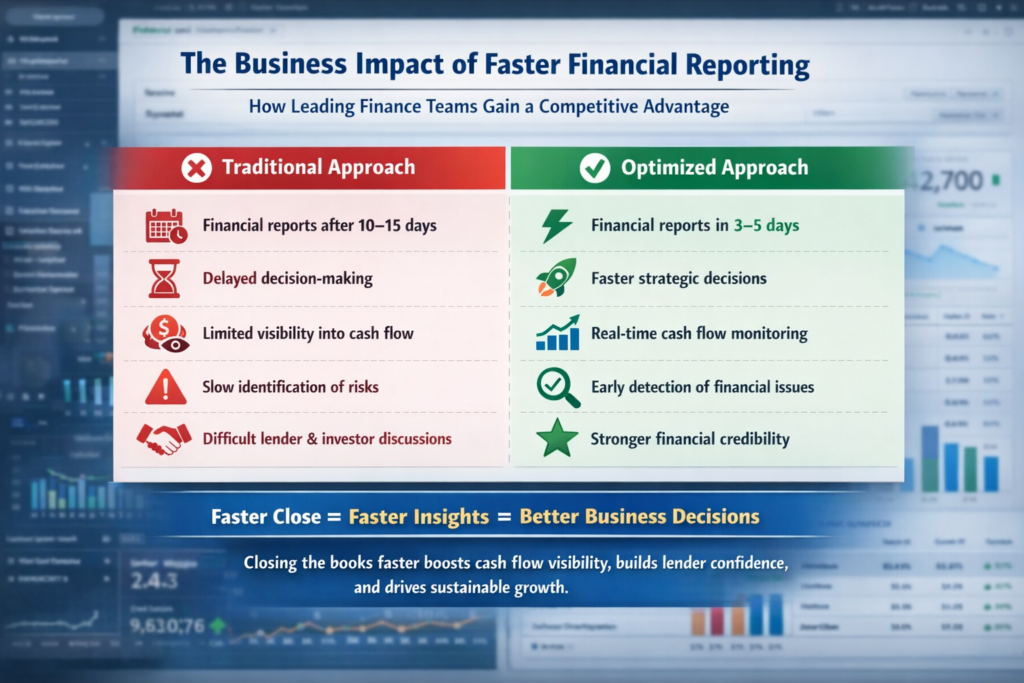
The Business Impact of Faster Financial Reporting :-
Revenue Growth
Consistent revenue growth demonstrates market demand and expansion potential.
Profitability
Investors carefully review profitability metrics such as Gross Profit Margin, Operating Margin and Net Profit Margin.
One of the most commonly used profitability measures is the Net Profit Margin.
Formula:
Net Profit Margin = (Net Profit ÷ Revenue) × 100
A higher margin often reflects stronger operational efficiency and pricing power.
Return on Equity (ROE)
Investors also analyze Return on Equity (ROE), which measures how effectively management utilizes shareholder capital.
Formula:
ROE = (Net Income ÷ Shareholders’ Equity) × 100
A consistently strong ROE can indicate effective management and efficient use of investor capital.
Cash Flow Performance
Investors pay close attention to operating cash flow because businesses ultimately grow through cash generation rather than accounting profits alone.
Management Quality
Even strong financial performance may not be enough if management lacks strategic vision, governance practices, or operational discipline.
Why Turnover Alone Does not Guarantee Funding
One of the biggest misconceptions in business finance is that higher turnover automatically attracts lenders and investors.
Consider the following example:
| Column1 | Column2 |
| Company A | Company B |
| Revenue: $20 Million | Revenue: $10 Million |
| Net Profit Margin: 3% | Net Profit Margin: 15% |
| Debt Level: High | Debt Level: Low |
| Cash Flow: Unstable | Cash Flow: Strong |
| Investor Appeal: Lower | Investor Appeal: Higher |
Despite having lower revenue, Company B may be considered a stronger investment opportunity because of its profitability, financial discipline, and cash flow management.
This highlights an important reality:
Revenue creates attention, but profitability and cash flow create confidence.
The Financial Metrics That Matter Most
Leading finance teams continuously monitor the metrics that banks and investors use to evaluate businesses.
Liquidity Metrics
- Current Ratio
- Quick Ratio
- Working Capital
Profitability Metrics
- Gross Profit Margin
- Operating Margin
- Net Profit Margin
- Return on Equity (ROE)
Debt Metrics
- Debt-to-Equity Ratio
- Interest Coverage Ratio
- Debt Service Coverage Ratio (DSCR)
Cash Flow Metrics
- Operating Cash Flow
- Free Cash Flow
- Cash Conversion Cycle
By reviewing these metrics every month, management gains a clearer understanding of financial performance and risk exposure.
How Leading Finance Teams Cut Close Time by 50%
The month-end close process in finance is crucial, but many organizations still take 10-15 days to complete it due to data gathering, reconciliation, error correction, and reporting. This delay hinders timely decision making and responsiveness to market changes. Leading finance teams are improving their close process through automation, standardization and enhanced workflows, leading to significant reductions in close time by 50% or more, along with enhanced accuracy and compliance.
Why a Faster Month End Close Matters More Than Ever
Slow month-end reporting leads to missed opportunities and unmitigated risks, while faster financial reporting allows for optimized working capital, protected margins and agile, data driven decisions for market advantages and fiscal resilience.
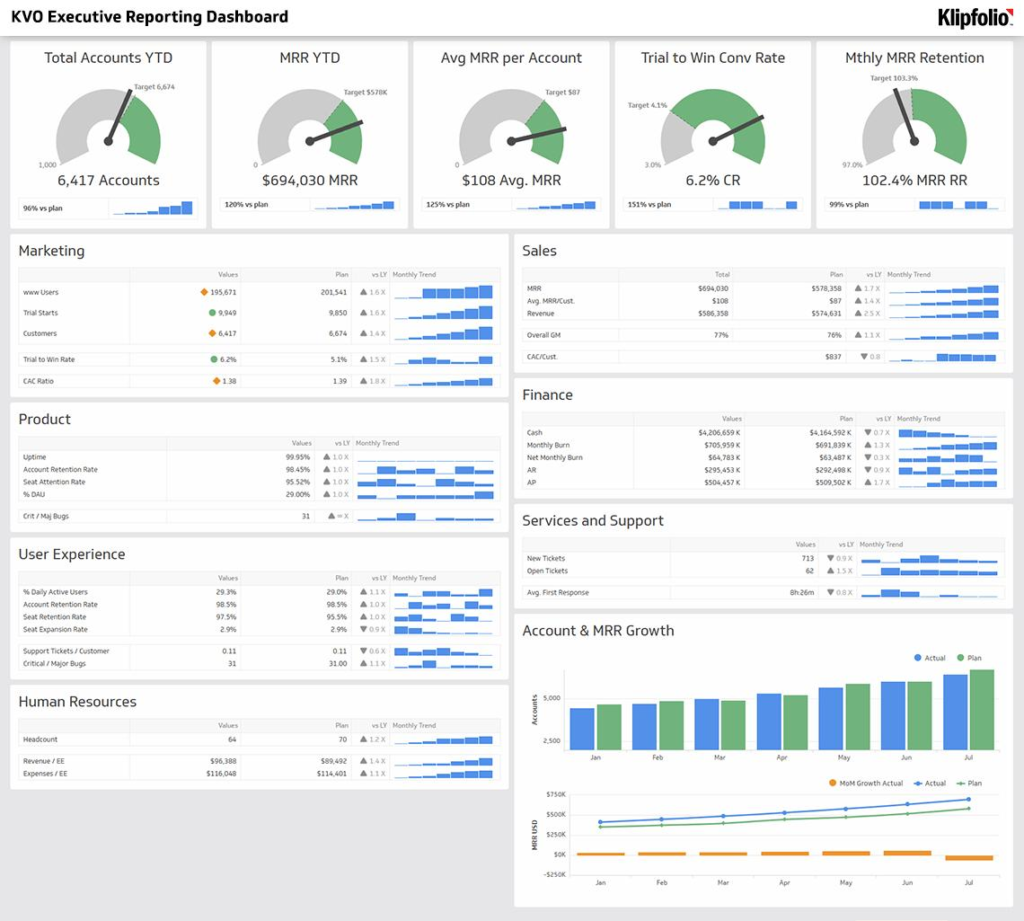
The Direct Link Between Faster Close and Funding Readiness
A fast month-end close is not simply an accounting achievement.
It creates significant business advantages:-
- Real time financial visibility that speeds up credit approvals
- Clearer proof of strong debt handling capabilities
- Stronger credibility through flawless, timely reporting
For Investors
- Improved transparency
- Timely performance tracking
- Better understanding of growth trends
For Business Owners
- Faster decision making
- Improved cash flow planning
- Early identification of financial risks
- Better preparation for funding opportunities
Conclusion:
An optimized month end close turns compliance into a competitive advantage. Shorter reporting periods enable leadership to watch margins, liquidity, leverage and cash flow, preventing risks from worsening. This speed reassures banks and investors of data accuracy, boosting market confidence in uncertain economies. Ultimately, faster closes lead to better executive decisions, access to better credit and sustained growth.