

For decades, payroll meant long spreadsheets, late-night reconciliations, and endless compliance headaches. HR managers worried about accuracy, CFOs worried about costs, and employees worried about errors in their paychecks. In short, payroll was seen as a necessary burden, not as a business enabler.
Payroll Before Automation: A Manual Burden
For several decades, payroll administration constituted a highly labor-intensive operational procedure. Human resources personnel were required to maintain extensive spreadsheet databases, verify attendance documentation, and perform tax computations through manual processes. Each payroll cycle presented inherent risks including computational errors, processing delays, and regulatory compliance deficiencies. Consequently, payroll functions were perceived as burdensome administrative obligations rather than strategic, value-added organizational activities.
Payroll After Automation: A Strategic Advantage
Cloud-based digital payroll solutions, enhanced by automated technologies, have transformed payroll administration into an efficient, transparent, and regulatory-compliant operation. Through automated computational processes, dynamically updated taxation protocols, and self-managed employee service interfaces, payroll management has achieved unprecedented speed and accuracy. Organizations now recognize payroll systems as strategic organizational assets that foster stakeholder confidence, optimize operational expenditures, and maintain regulatory adherence.
Comparison: Payroll Before vs After Automation
| Aspect | Before Automation (Manual Payroll) | After Automation (Digital Payroll) |
| Data Management | Spreadsheets, paper files, prone to duplication & errors | Cloud-based systems with centralized, real-time data |
| Accuracy | High chance of human error in calculations & deductions | Automated validation ensures error-free payroll |
| Time Consumption | Hours or days to process each cycle | Processing completed in minutes |
| Compliance | Dependent on staff keeping up with changing laws | Systems auto-update with federal & state tax rules |
| Employee Experience | Employees relied on HR for pay slips & queries | Self-service portals for pay slips, benefits & tax info |
| Scalability | Difficult to handle when workforce grows | Easily scalable for small, mid-sized, or global teams |
| Cost Efficiency | More staff needed for manual checks | Reduced overhead through automation & streamlined processes |
| Reporting & Insights | Limited reporting, mostly reactive | Real-time dashboards & predictive insights |
Why This Transformation Matters
Payroll is more than just paying employees on time — it affects compliance, trust, and business sustainability. Moving from manual payroll to digital automation matters most because:
- Reduces Risk of Costly Errors
Automated tax filing reduces errors and prevents costly fines and reputation harm. - Strengthens Compliance & Audit Readiness
U.S. payroll laws are complex and change often. Automated systems maintain compliance with tax regulations, minimizing legal risks and simplifying audits. - Boosts Employee Satisfaction & Retention
Employees expect timely, transparent payroll. When salaries are accurate, benefits are clear, and self-service portals are available, employees feel valued — directly improving retention. - Frees HR & Finance for Strategic Work
Instead of spending hours on repetitive payroll tasks, HR and finance teams can focus on higher-value functions like workforce planning, cost optimization, and employee engagement. - Improves Decision-Making Through Insights
Payroll automation offers instant analytics on labor expenses, overtime, and benefits, enabling data-driven decisions that control costs and boost profits. - Builds Trust With Stakeholders
From employees to investors, accurate and transparent payroll builds confidence in the company’s governance and operational strength.
Payroll Automation Enhances Compliance
Compliance is one of the most challenging aspects of payroll management. Laws and tax codes in the U.S. frequently change, and even a small mistake can lead to significant financial penalties and reputational harm. Payroll automation ensures businesses stay ahead of these challenges by:
- Automatic Tax Code Updates: Digital payroll systems automatically update with regulatory changes, eliminating manual tracking and reducing compliance errors for HR teams.
- Error-Free Reporting & Filing: Automated systems create compliant tax forms, W-2s, and e-filings, reducing errors and ensuring prompt submissions.
- Audit-Ready Documentation: All transactions and adjustments are logged for transparency. Businesses can instantly provide records when regulators request them.
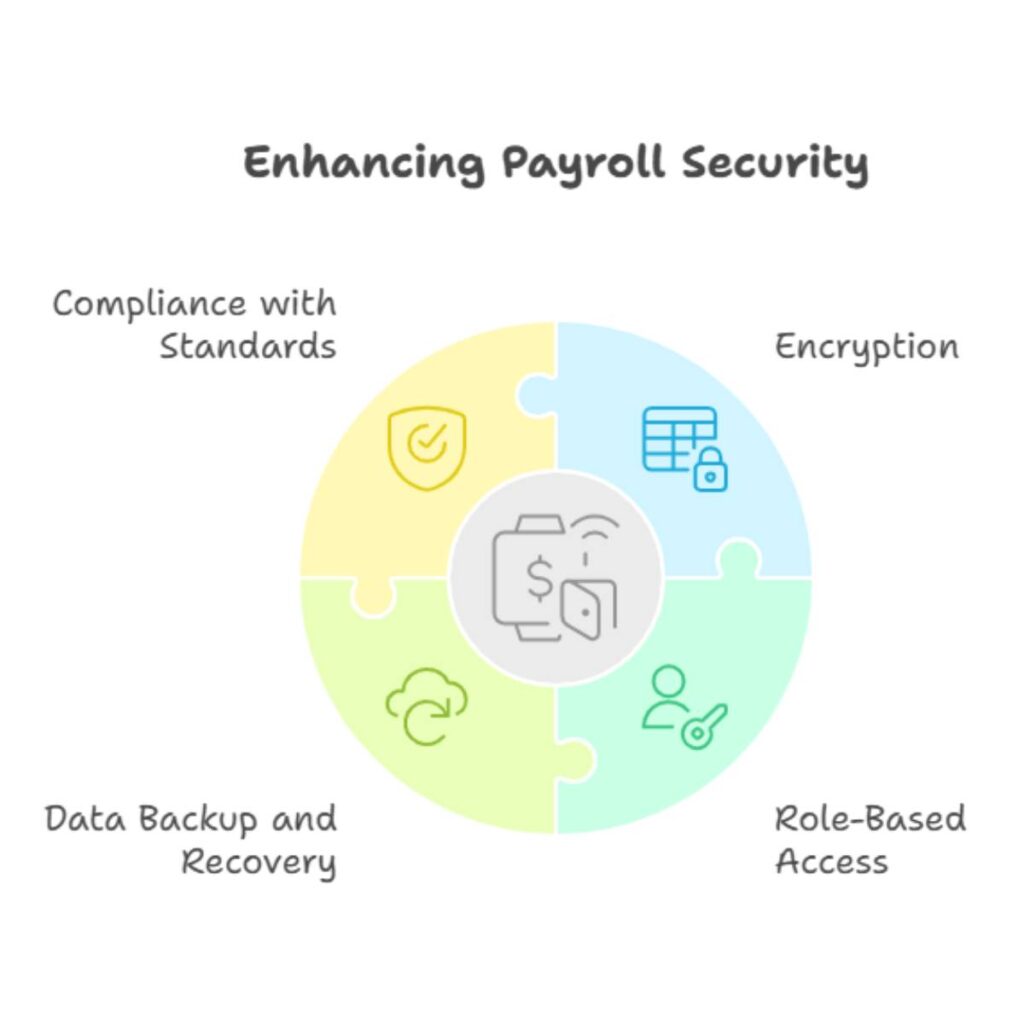
Payroll contains sensitive employee information like SSNs, tax IDs, and bank details. Manual systems risk data theft or loss. Automated payroll reduces these risks by:
- Payroll data is encrypted during storage and transmission to prevent unauthorized access and breaches.
- Automated systems enable role-based access, restricting sensitive data viewing to authorized personnel like payroll managers or CFOs.
- Digital payroll systems automatically backup data and use recovery systems to prevent data loss from hardware failures or cyberattacks.
- Leading payroll software providers comply with GDPR and SOC standards to protect employer and employee data.
The Global Payroll Challenge
In today’s interconnected economy, many companies are no longer limited to one location or even one country. Remote hiring, cross-border teams, and international expansions are now the norm. But this global workforce brings with it a new and complex payroll challenge.
Key Complexities in Global Payroll:
- Multiple Jurisdictions
Every nation and U.S. state has unique tax, labor, and compliance laws. Manual management raises error risks and costs. - Currency Fluctuations
When employees are paid in different currencies, exchange rate volatility can create financial discrepancies and budgeting challenges. - Diverse Employee Benefits
Payroll teams must track varying regional health insurance, retirement, and statutory benefit requirements for compliance. - Data Privacy Regulations
Laws like GDPR in Europe and state-level privacy laws in the U.S. require payroll teams to ensure secure handling of sensitive employee data across borders.
Kariwala & Co. LLP: Enabling the Payroll Shift
At Kariwala & Co. LLP, we help U.S. businesses transition from manual payroll struggles to automated, efficient systems. Our expertise ensures:
- Easy digital payroll setup.
- Strict adherence to U.S. payroll regulations.
- Secure, scalable solutions that grow with your workforce.
With the right automation, payroll is no longer a back-office burden — it’s a driver of growth and trust.
Resources:
Payroll Best Practices — Steven M. Bragg