

Accounting teams face escalating digital threats today. Finance professionals manage highly lucrative data like payroll archives, tax declarations, and private ledgers. This high value intelligence makes accounting networks prime targets for fraud and ransomware.
A single breach triggers devastating corporate crises. Compromises spark immediate cash losses, operational freezes, regulatory fines, and permanent brand degradation. Beyond fiscal damage, data leaks critically fracture client trust.
Vulnerabilities multiply exponentially as operations shift to cloud architectures, distributed workforces, and automated tools. This digital transition increases operational speed but introduces sophisticated exposure risks.
Consequently, network defense is no longer a standard technical task. Data protection is a core boardroom priority essential for risk mitigation, regulatory alignment, and institutional durability.
Why Digital Asset Protection Matters in Accounting :-
Accounting professionals serve as custodians of some of an organization’s most sensitive data, such as:
- Bank account and payment information
- Taxpayer identification numbers (TINs)
- Payroll and employee compensation records
- Financial statements and accounting reports
- Vendor and supplier details
- Confidential client information
Cybercriminals often target accounting professionals because the financial data they handle can be exploited for fraudulent activities, identity theft, and ransomware attacks.
Research shows that phishing continues to be one of the primary causes of cybersecurity breaches, impacting organizations of all sizes each year. As cyber threats continue to evolve, robust cybersecurity measures have become an essential aspect of risk management for accounting firms, helping protect sensitive information, maintain client trust, and ensure business continuity.
The Biggest Cybersecurity Threats Facing Accounting Firms
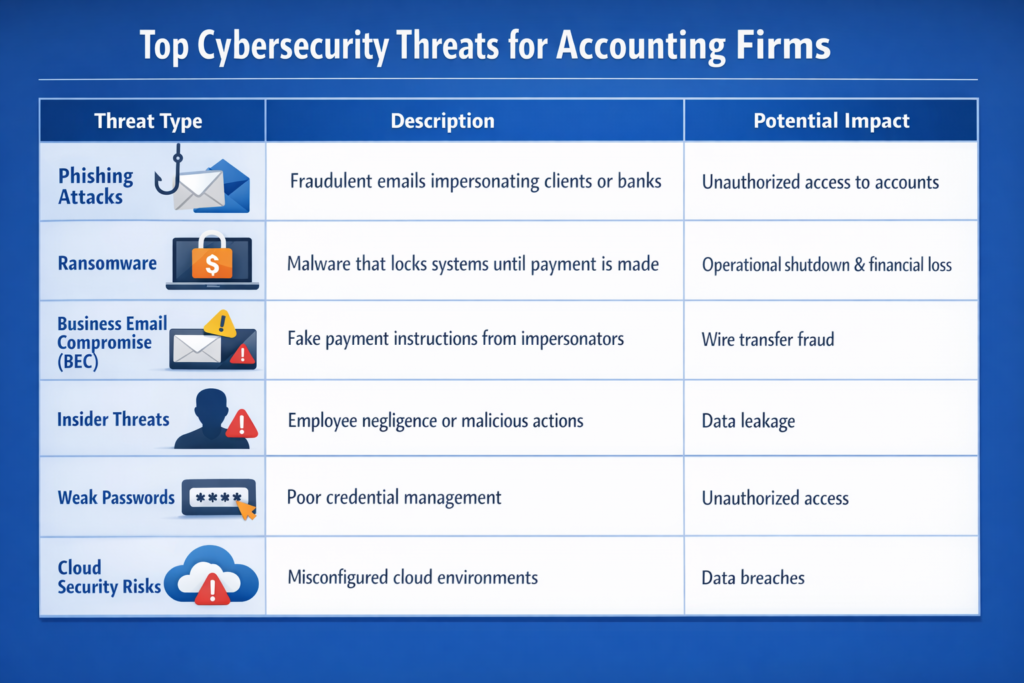
Why US Businesses Are Prioritising Accounting Information Security:-
1. Regulatory Compliance
Organizations must strictly follow data protection laws and financial reporting mandates. Public companies now face strict requirements to openly disclose their cybersecurity governance and any active security incidents.
2. Expansion of Remote Work
Distributed accounting teams regularly access sensitive financial networks from various external locations. This shift significantly multiplies the potential entry points for cyber risks.
3. Transition to Cloud Accounting
Platforms like QuickBooks Online, Xero, and integrated ERP systems optimize accounting workflows. However, these digital environments demand highly robust security controls to remain safe.
4. Preservation of Client Trust
Clients demand absolute security for their personal and financial data. A single data breach can instantly and permanently ruin vital business relationships.
Essential Data Defense Protocols for Accounting Practices :-
Enforce Multi-Factor Authentication
Mandate a secondary verification protocol alongside standard password inputs.
Encrypt Sensitive Financial Assets
Scramble organizational data so it remains completely unreadable during unauthorized interception.
Perform Routine Security Audits
Uncover and patch system vulnerabilities before malicious actors exploit them.
Provide Continuous Employee Training
Educate staff regularly because human error represents a major security vulnerability.
Maintain Frequent Software Updates
Patch applications immediately since outdated systems offer easy entry points for hackers.
Construct an Incident Response Strategy
Formulate a precise action plan to mitigate damage swiftly during a breach.
| Cybersecurity Checklist for Businesses | Column1 |
| Security Measure | Importance |
| Multi-Factor Authentication | High |
| Data Encryption | High |
| Employee Training | High |
| Secure Cloud Storage | High |
| Regular Backups | High |
| Cyber Insurance | Medium |
| Penetration Testing | Medium |
| Access Control Policies | High |
The Financial Toll of Neglecting Data Defense
Failing to invest in cybersecurity can result in:
- Financial losses from fraud
- Legal and regulatory penalties
- Reputational damage
- Loss of customer trust
- Business interruption
- Expensive recovery costs
In many cases, the cost of prevention is significantly lower than the cost of recovering from a cyberattack.
The Future of Accounting Data Protection
Cybersecurity is becoming significantly more critical as artificial intelligence, automation, and cloud technologies continuously reshape the accounting industry. Progressive firms are actively embedding protection layers across all financial workflows. This strategic integration effectively converts cybersecurity from a simple defensive reaction into a true competitive advantage.
Organizations that prioritize data protection safely secure confidential information while simultaneously cultivating stakeholder trust, meeting regulatory requirements, and reinforcing long term operational resilience.
Final Thoughts
Protecting digital financial records is a fundamental obligation. Firms, finance departments, and business owners handle sensitive data daily, making security a core strategic priority.
Growing cyber threats expose organizations to fraud, downtime, legal fines, and reputational ruin. A single breach permanently harms profit margins and client relationships.
Organizations minimize risks through robust defense frameworks, staff training, and proactive management. These practices safeguard critical files, boost client confidence, and ensure compliance.
Prioritizing network defense builds a superior market position. Investing in data protection ensures future expansion, operational durability, and stakeholder trust.