

In today’s fast-paced business environment, money locked in outstanding invoices represents more than just an annoyance; it creates obstacles to expansion. When accounts receivable payments are delayed, companies lose their capacity to make investments, compensate vendors, and capitalize on new prospects. Both American businesses and accounting firms can benefit from minimizing Accounts Receivable delays, converting their collections process from a passive liability into a competitive advantage. This piece presents professionally backed strategies to accelerate payment timelines, enhance customer relations, and establish robust cash flow stability consolidated in a single resource.
The Cost of Every Day Late
Every extra day an invoice remains unpaid adds hidden cost. It eats into working capital, increases reliance on credit lines, and creates ripple effects through vendor terms, operational flexibility, and profitability. It may seem routine, but delayed receivables often hide deeper issues: inconsistent billing, weak client onboarding, or neglected credit terms. Recognizing that each outstanding invoice is a small yet significant drag on financial momentum is the first step toward change.
Establishing Clear Credit and Collection Policies
Establishing clear credit policies stands as one of the most powerful approaches for avoiding payment delays. By outlining terms, payment requirements, and collection processes from the beginning of business partnerships, companies can avoid conflicts later on. Credit limits ought to be determined through analytical risk evaluations instead of guesswork. Conducting periodic assessments of client financial stability enables organizations to modify terms when market circumstances or customer situations change. An organized credit policy converts accounts receivable management from a responsive approach into a preventive control system.
Transform Billing into an Immediate, Clear-Cut Procedure
Payment delays often originate from billing-related issues such as confusing invoice layouts, absent reference information, or sluggish problem resolution. Contemporary accounts receivable methods eliminate these obstacles by automatically creating invoices immediately upon delivery completion or service fulfillment. However, automation by itself is insufficient: invoices need to be clear and comprehensive, including purchase order details, service explanations, payment deadlines, and convenient payment options. When billing occurs promptly and invoices are user-friendly, payment processing accelerates accordingly.
Personalize Communication & Build Payment Culture
Prompt receivables are not automatic occurrences they result from established relationships and clear expectations. When collection efforts are viewed as an essential component of customer service, it facilitates quicker payment processing. Customized payment reminders, transparent communication about payment status, and recognition of punctual payments help establish an environment of mutual respect and responsibility. Customers who experience appreciation and receive clear guidance throughout the payment procedure are more likely to pay promptly with minimal conflicts.
Data Analytics for Smarter Decision-Making
AI and data analytics are reshaping how companies manage accounts receivable. Predictive analytics can assess payment patterns, identify clients likely to delay, and help teams prioritize efforts effectively. These insights also assist in forecasting cash flow, allocating resources, and optimizing collection timelines. By transforming raw receivable data into actionable intelligence, businesses gain a powerful tool for preventing delays and improving financial predictability.
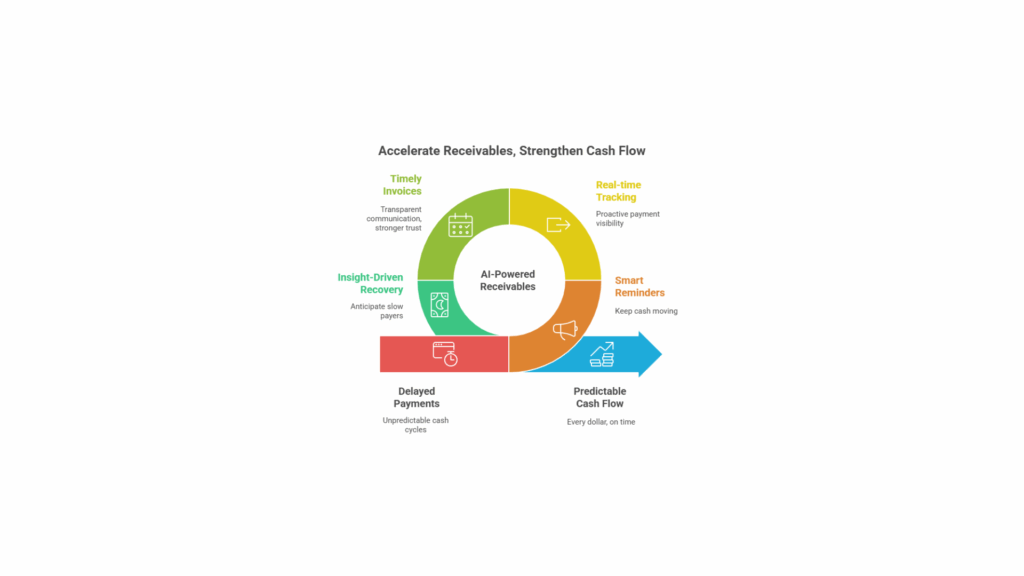
Utilize Information to Forecast and Prevent Disruptions
Leading finance departments today rely equally on data analysis and communication. Data analytics tools can identify customers experiencing changes in payment behavior, pinpoint bills at risk of late payment, and suggest modifications to payment terms or follow-up schedules. Rather than pursuing overdue payments, organizations transition to preventing payment delays, evolving from reactive to preventive accounts receivable strategies. These forecasting tools particularly benefit accounting firms handling numerous clients by improving financial projections, optimizing staff allocation, and enhancing cash flow management.
Early Payment Incentives and Strategic Negotiations
A balanced mix of incentives and structured negotiation can accelerate payments without compromising client relationships. Offering small discounts for early payments can motivate clients to clear dues promptly. At the same time formal late fee clauses serve as a gentle deterrent against habitual delays. However, applying these measures strategically based on client behavior and business volume ensures fairness and long-term collaboration.
Continuous Monitoring, Process Refinement & Governance
Minimizing accounts receivable delays requires an ongoing systematic transformation rather than a single initiative. Financial departments must consistently track essential metrics including Days Sales Outstanding invoice maturity periods, disagreement frequencies, and recovery performance. Routine assessment sessions, thorough analysis of delayed payment causes, and workflow improvements are crucial. Companies that regularly evaluate and modify their accounts receivable processes each month typically experience enhanced cash flow results and improved financial reputation.
Conclusion
Delayed accounts receivable extends beyond mere accounting challenges it signifies locked capital, postponed expansion, and heightened exposure. Through implementing structured credit policies, streamlining invoice processes, maintaining proactive client communication, utilizing analytics, and tracking metrics regularly, American companies and accounting practices convert Accounts Receivable management into a strategic advantage.
Kariwala & Co. LLP collaborates with clients to execute these approaches, accelerating payment collection, enhancing cash flow, and fostering robust financial health ensuring each outstanding receivable transforms into capital that powers business expansion.
Reference:
Accounts Receivable Management Best Practices — John G. Salek
https://www.kariwala.pro/services/accounting/